Customer churn rarely comes out of nowhere, but many teams still catch it too late. By the time a buyer stops engaging, downgrades, or cancels, the damage is already in motion. That’s why more companies are using AI tools to predict customer churn, spot risk earlier, prioritize intervention, and protect retention.
In this guide, we’ll compare the best customer churn prediction software options and break down where each one fits best.
Key highlights:
- Customer churn prediction software spots at-risk customers before they ghost you, so you can actually do something about it.
- Top picks of churn mitigation and prediction tools include Pecan, Gainsight, Zendesk, ChurnZero, and Pendo (among others). They range from AI-powered prediction platforms to customer success solutions.
- When shopping churn technology around, look for easy interfaces, solid data connections, AI/ML smarts, scalability, integrations, and security.
- Pecan AI helps you create your own model for predictive churn analysis to target the right interventions and keep your customers happy. No coding skills required.
Why customer churn prediction matters
Predicting churn is important because customers rarely announce that they’re about to leave. More often, churn starts with small warning signs: a subscriber visits the cancellation page twice, an account logs in less often after a messy onboarding, or a shopper stops buying after late deliveries and unresolved support issues. Catching those signals early enables you to step in before revenue disappears.
Thanks to technology and specially one called predictive customer analytics, you can use your own business data to predict who’s most likely to bail. Then you can actually do something before they churn.
Spot the early warning signs (declining usage, support complaints, that weird feeling when someone stops opening your emails), and you’ve got time to re-engage them with targeted campaigns, special offers, or just fixing whatever’s bugging them.
Why should you care about customer churn analytics
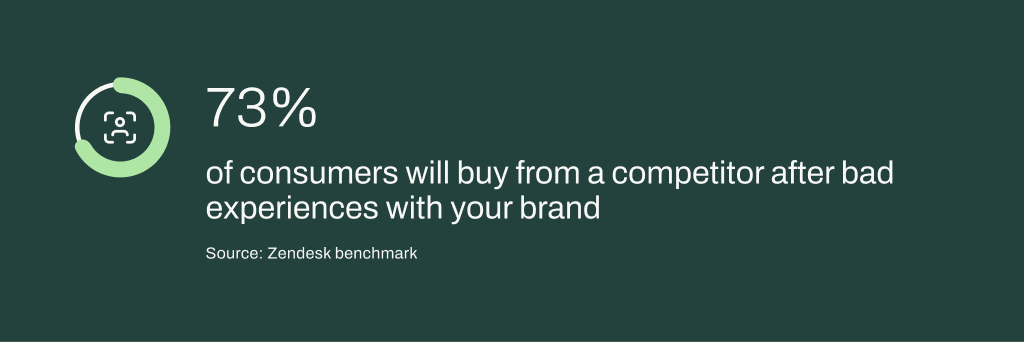
Churn prediction and prevention pays off big time. When buyers leave, you’re not just losing their revenue. You’re also facing the brutal cost of losing them to competitors. Zendesk reports that 73% of consumers will switch to a competitor after multiple bad experiences, while three in four will spend more with businesses that deliver a good customer experience.
In a world where annual churn in B2B software can sit in the low teens, and other sectors climb much higher, being proactive isn’t optional anymore. Every point of churn you prevent helps protect retained revenue and future growth.
Want to check where you’re currently at when it comes to churn rates? We gathered the main U.S. national averages by industry according to the CustomerGauge latest benchmark:
- The annual churn in SaaS such as B2B computer software averages 14%
- Telecommunications companies average 31% churn
- Manufacturing sits on an average of 45% churn risk
- Logistics averages 40% in churn rates
- Consumer packaged goods sit on a 40% average churn
- Wholesale leads the ranking of churn risks with an average of 56%
What makes customers fly away? Signals to watch when predicting churn
Churn risk often starts with the customer experience. According to PwC’s 2025 Customer Experience Survey, 52% of consumers said they stopped using or buying from a brand after a bad experience with its products or services, while 29% said they stopped because of poor customer experience, either online or in person.
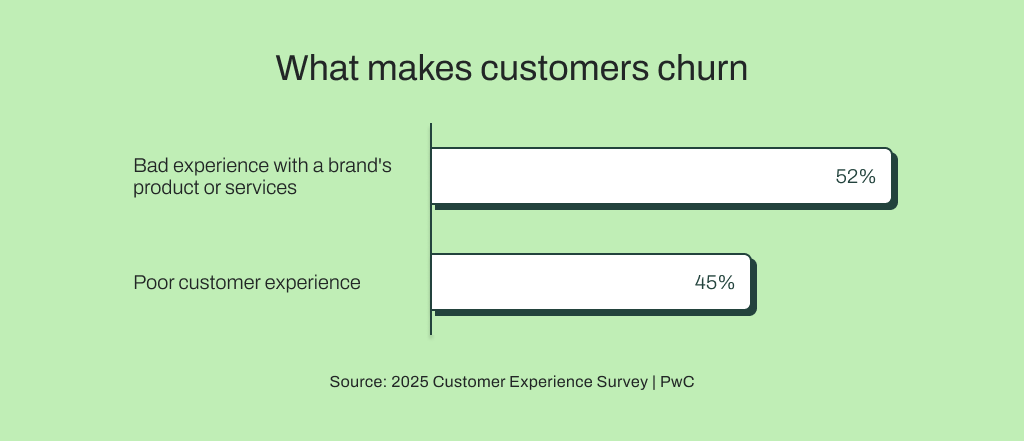
Basically, how you deliver, communicate, and support the customer experience plays a major role in whether customers stay or go.
What is customer churn prediction software?
Customer churn prediction software uses data and machine learning to proactively identify customers at risk of leaving. These tools analyze a wide range of signals (purchase history, product usage, support interactions, surveys, subscription data, you name it) to detect the warning signs that often show up before churn happens.
By processing large datasets and finding patterns humans might miss, your prediction software generates a churn risk score or alert for each customer or account. A high risk means the customer is likely to churn if you don’t take action.
Think of it as an early warning system. Simply tracking your churn rate after people have already left isn’t enough. Modern solutions often use AI to continually improve predictions by using natural language processing (NLP) to gauge customer sentiment from support tickets or reviews, or time-series analysis to spot declining engagement.
The result? Predictive insights your customer success, marketing, or account teams can act on to improve customer retention.
What to consider when choosing churn analytics solutions
Churn prediction software don’t just flag at-risk customers. The best predictive analytics tools help you take action. They integrate with CRM systems, marketing automation, email platforms, or in-app messaging, so you can automate targeted outreach to at-risk users. The goal is to enable timely interventions that actually reduce churn.
But not every churn mitigation and prediction tool is a winner (shocking, we know.) When you’re trying to find the best fit, here’s what to keep in mind:
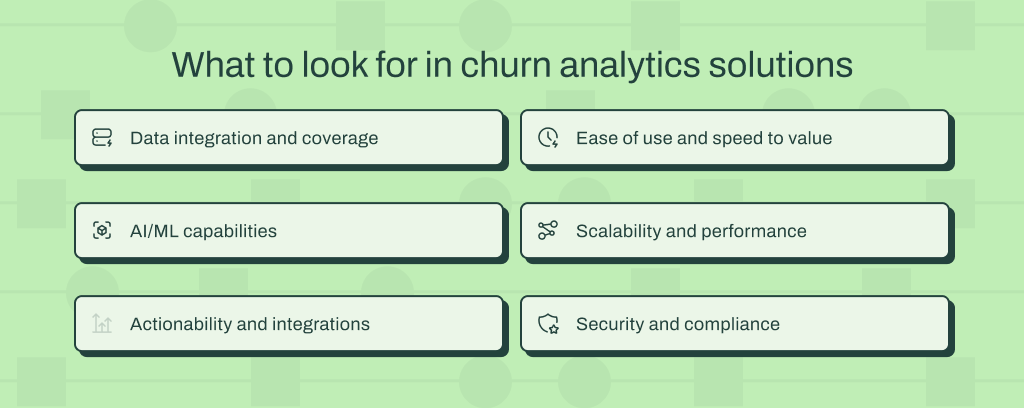
Data integration and coverage
Your churn analysis software needs to hook up smoothly with your top data sources. Think product databases, CRM systems, billing platforms, support desks, and survey tools. More complete the data will lead you to better predictions.
Look for built-in integrations or APIs that work with your databases and business applications, such as Salesforce, Snowflake, Shopify, Zendesk, and HubSpot. This connectors ensure your churn prediction model can access all the signals across the customer journey.
Ease of use and speed to value
Your team shouldn’t need a PhD in data science to use churn analytics solutions. Leading AI-powered churn prediction vendors now offer no-code or low-code model building, intuitive dashboards, and clear visualizations of the prediction drivers.
These capabilities shorten training time and help you see value within weeks, not months. Fast setup and an intuitive UX will maximize adoption by your customer success or marketing team.
AI/ML Capabilities
The best platforms providing real-time churn risk dashboards leverage machine learning and even generative AI to analyze complex datasets and identify subtle churn signals. AI-driven tools can automatically fine-tune prediction models, handle unstructured data like text, and continuously improve accuracy over time.
You can even try churn prediction software that use AI to analyze 100% of support interactions and pinpoint dissatisfaction cues. Evaluate whether a platform offers advanced analytics for customer experience such as predictive scoring, health indices, or even conversational AI assistants to help explore your data.
Scalability and Performance
As your business (and data) grows, your churn analysis software must scale with you. Ensure the platform can handle increasing customer volumes and data records without slowing down.
AI tools for predicting SaaS customer churn are ideal for scalability since they can process millions of rows and retrain models as your dataset expands. Also consider if the pricing model will scale affordably as you add more customers or users.
Actionability and integrations
Prediction is step one. Taking action is step two. Look for features that let you operationalize churn insights.
Useful capabilities include:
- Automated alerts,such as notifying reps when an account’s risk score worsens
- Built-in campaign tools to trigger win-back offers or in-app messages
- Integration with communication channels (email, SMS, app notifications)
Platforms providing AI-based churn risk notifications might even integrate with customer engagement tools, so you can directly launch a retention campaign for a high-risk segment.
Security and compliance
Since churn prediction models use sensitive customer information, robust data security is a must. Enterprise-grade solutions should offer encryption, access controls, and compliance with privacy regulations (GDPR, CCPA, etc.). If you’re in a regulated industry, make sure the vendor meets those requirements.
By weighing these criteria, you can choose churn prediction software that fits your organization and empowers your team to proactively retain more customers.
Top 10 churn mitigation and prediction tools in 2026
Ready to dive into the options? Here’s a rundown of the 10 best churn prediction software tools as of 2026. These comparisons will help you understand customer behavior, generate actionable insights to lower churn, and improve retention rates.
We’ve included a mix of AI-powered analytics platforms and customer success software, prioritizing SaaS churn analytics prediction and prevention that are practical for modern businesses.
| Churn mitigation and prediction tools | Best for | Key features |
| Pecan AI | Data analysts looking to automate predictive modeling for diverse churn scenarios | No-code AI agent; fast model deployment; robust data integration |
| Gainsight | Enterprise customer success teams | Health scoring; customer intelligence, ML-driven risk alerts |
| Zendesk | Support-driven churn management | AI sentiment analysis; “Spotlight” issue detection; omnichannel CX insights |
| ChurnZero | B2B SaaS customer success (CSMs) | Customer health scoring; usage analytics; automated playbooks |
| Pendo | Churn risk scoring for SaaS (SMB to mid-market) | AI churn risk scores; revenue at-risk tracking; alerts for at-risk accounts |
| Hotjar | UX/UI-focused churn reduction (web/apps) | Session recordings & heatmaps; user feedback polls; conversion funnels |
| Qualtrics XM | Voice-of-customer and feedback-driven churn | NPS/CSAT tracking; journey analytics; predictive churn insights from feedback and experience data |
| Vitally | Product-led startups and CS team collaboration | Real-time health scores; customer engagement workflows; team collaboration tools |
| Akkio | AI modeling for churn (no-code ML) | Auto ML model builder; churn risk scoring; also does lead scoring & forecasting |
| Retently | Subscription businesses focusing on NPS/CSAT | NPS/CSAT tracking; AI-powered feedback analysis; customer health scoring |
1. Pecan AI (best for automated predictive modeling for churn)
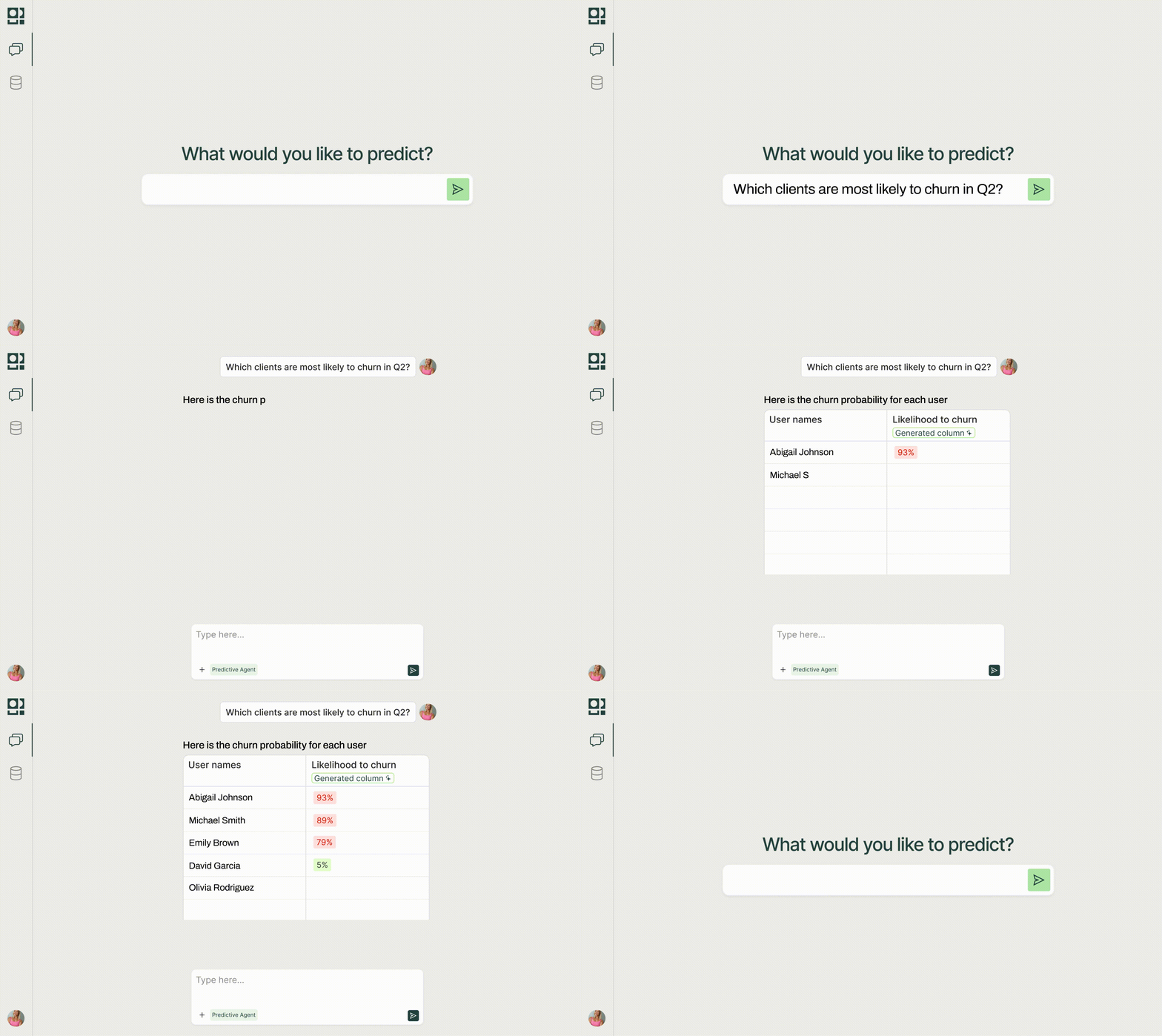
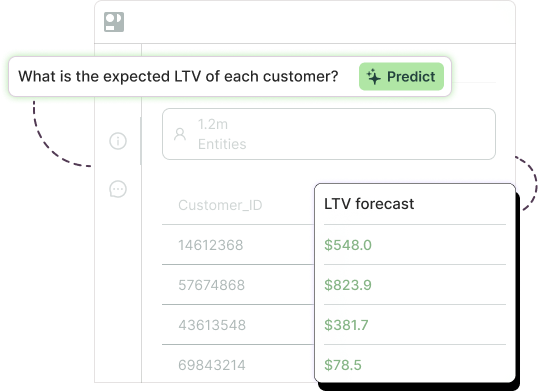
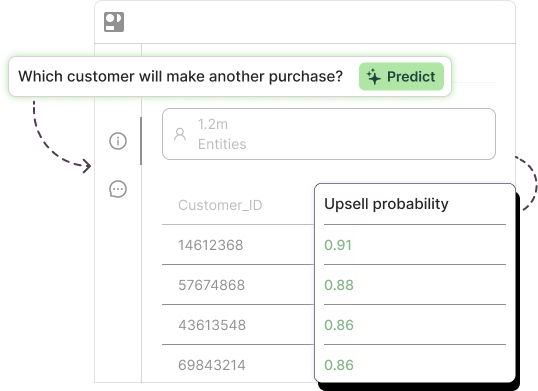
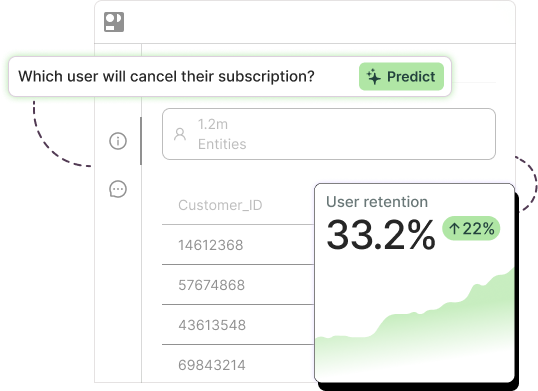
Pecan is a powerful predictive analytics platform that makes advanced churn modeling accessible, even if you don’t have data scientists on your team. The Pecan predictive AI agent uses automated machine learning to analyze your historical customer data and build accurate churn prediction models with minimal effort.
With Pecan’s predictive modeling AI agent, business and data analysts can craft models and uncover insights without writing code. In practical terms, this technology lets your BI, marketing or any other team quickly train machine learning models to forecast churn, conversion, customer lifetime value, and more, all through an intuitive interface.
Under the hood, Pecan automates complex tasks like data prep, feature engineering, and model tuning. The wellness brand Hydrant, for example, is a company that uses AI to predict customer churn. The executives at Hydrant used Pecan to ingest years of purchase data and had a custom churn model built in just two weeks.
With Pecan, you can segment customers by churn risk and understand why they might leave, enabling highly targeted retention campaigns. All while the Pecan system continues learning from new data, so predictions stay accurate over time.
- Amazon Redshift
- Snowflake
- Salesforce
- HubSpot
- CSV uploads
- API connections
- 15+ databases
- Data warehouses
- Other business applications
Pecan pricing: Pecan is offered as a SaaS churn analytics prediction and prevention product with tiered plans. As of 2026, pricing starts at around $760 per month for the Starter plan (when billed annually).
What Pecan is great at:
- No-code predictive modeling: Pecan’s co-pilot and automated ML allow users to build churn models without coding expertise, enabling fast adoption by analysts and marketers.
- Rapid time to value: You can deploy predictive models in weeks. Pecan’s automated data prep and training shorten the usual AI development cycle dramatically.
- Scalability: The platform can handle small startups to Fortune 500 enterprises. Pecan is cloud-based and scales to billions of data rows, so growing customer datasets aren’t an issue.
- Flexible integration and deployment: Pecan can deliver predictions directly into your tools (send churn risk scores back to your CRM or data warehouse) and supports batch or real-time prediction updates.
- Continuous improvement: Pecan continuously retrains and improves models as new data comes in, keeping AI churn predictions accurate as customer behavior evolves.
2. Gainsight (best for Enterprise CS teams)
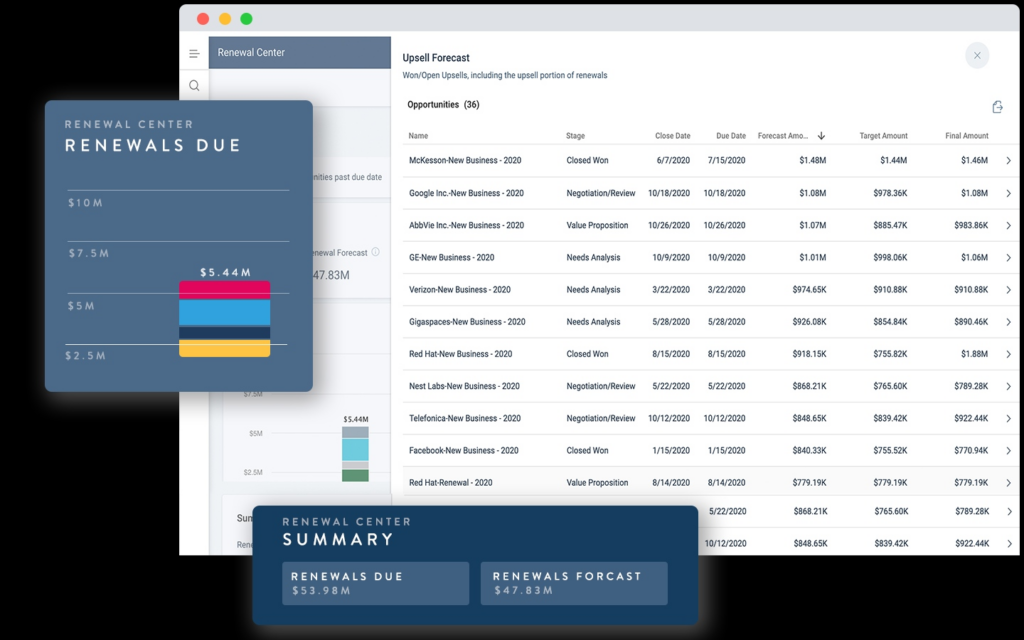
Gainsight is the enterprise heavyweight of customer success platforms, serving over 3,500 companies, including nearly 200 publicly traded organizations, with churn prediction capabilities available.
Gainsight’s configurable health scorecards aggregate signals from product usage, support activity, sentiment data (NPS, CSAT), engagement metrics, and financial indicators. Admins assign custom weights to produce composite health scores. Beyond rule-based scoring, machine learning optimization auto-tunes models based on historical outcomes.
Their Staircase AI integration (acquired August 2024) automatically scans all customer communications using AI to detect sentiment shifts, competitive mentions, and relationship deterioration up to six weeks earlier than product usage data alone. When risk signals surface, automated playbooks and the Journey Orchestrator trigger multi-step intervention campaigns.
Gainsight integrations:
- Salesforce
- Slack
- Jira
- Zendesk
- 100+ apps and integrations through the Gainsight marketplace
Gainsight pricing: No public pricing. Based on Vendr data from 292 purchases, median annual contract is $50,125 (range: $13,871–$194,409). Year 1 total cost including implementation and admin FTE: $90,000–$140,000. No free trial.
What Gainsight is great at:
- Comprehensive churn detection: Gainsight combines usage, support, sentiment, communication intelligence, and relationship mapping. Unmatched signal breadth.
- Salesforce integration: Real-time bi-directional sync with native Lightning components.
- Advanced automation: Journey orchestration for intervention campaigns.
- Enterprise-grade: The platform scales with security and compliance certifications.
Gainsight areas of limitation:
- Long implementation: 3–6 months typical, some deployments take nearly two years.
- Requires dedicated administrator: Complex configuration and ongoing maintenance demand technical expertise.
- Steep learning curve: G2 reviews consistently cite complexity and dated UI.
- No native data warehouse connectors: Missing first-party Snowflake, BigQuery, and Redshift support.
3. Zendesk (best for support-driven churn management)
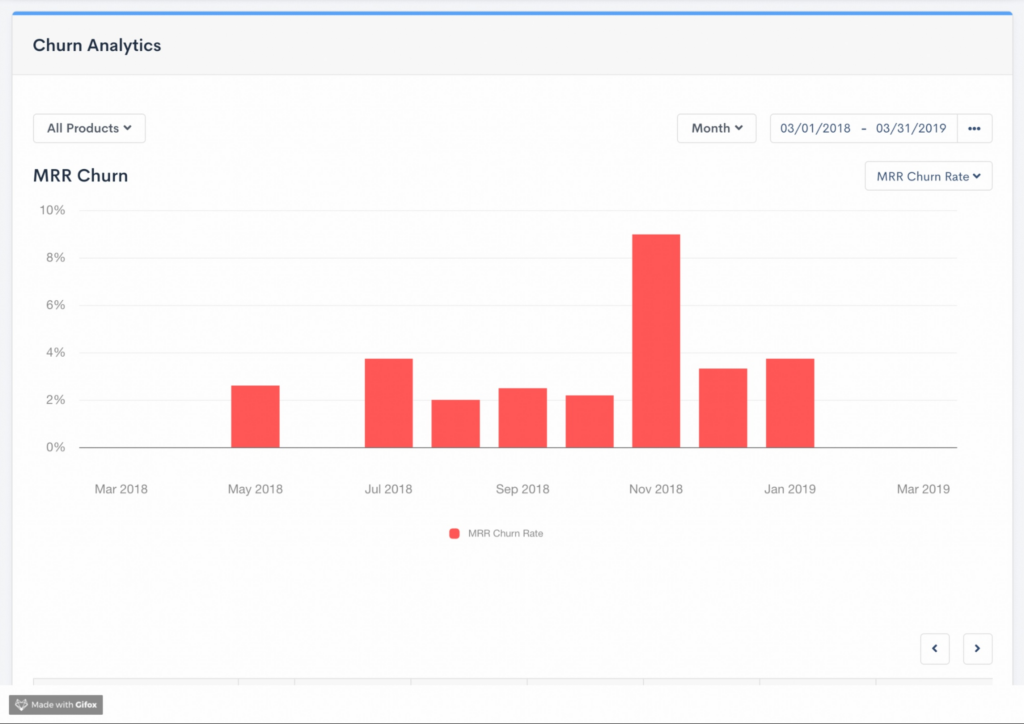
Zendesk is a customer service and support platform that has recently introduced churn capabilities to enhance their customer experience management offerings. While not a dedicated churn prediction tool, its AI-powered customer service suite can effectively predict and prevent churn by analyzing support interactions and customer sentiments.
Zendesk’s tools unify all the ways customers reach out (email, chat, social, phone, etc.) into one hub. This 360° view allows companies to track issues and respond faster, which directly improves satisfaction and retention.
Notably, Zendesk introduced features like AI-powered quality assurance (QA) and sentiment analysis that monitor 100% of support tickets and conversations to gauge customer happiness. The AI (including a feature they call Spotlight) flags potentially “problematic” cases. If it detects angry sentiment or repeated complaints, it highlights those customers as needing urgent attention, pointing outchurn prediction signals.
Zendesk integrations:
- Shopify
- Slack
- HubSpot
- Open API
- Marketplace apps for CRM, ecommerce, and support workflows
Zendesk pricing: Zendesk’s pricing is tiered based on functionality and typically charged per support agent. The Support Team plan starts at $135 per agent/month when billed annually, ranging up to $1,105 per agent/month when billed annually for the Enterprise tier with advanced AI features. Zendesk provides a 14-day free trial.
What Zendesk is great at:
- Customer service excellence: Zendesk improves the support experience, which is directly tied to churn.
- AI-driven churn signals: Through sentiment analysis and QA, Zendesk surfaces at-risk customers hidden in your support queue.
- Unified omnichannel view: All customer interactions in one place.
Zendesk areas of limitation:
- Not solely a churn analytics solution. Zendesk is first and foremost a support platform. To directly predict churn, you either use its signals or integrate it with dedicated churn analytics.
- Limited predictive analytics outside of support context.
- Cost scales with agents
4. ChurnZero (best for B2B SaaS customer success)
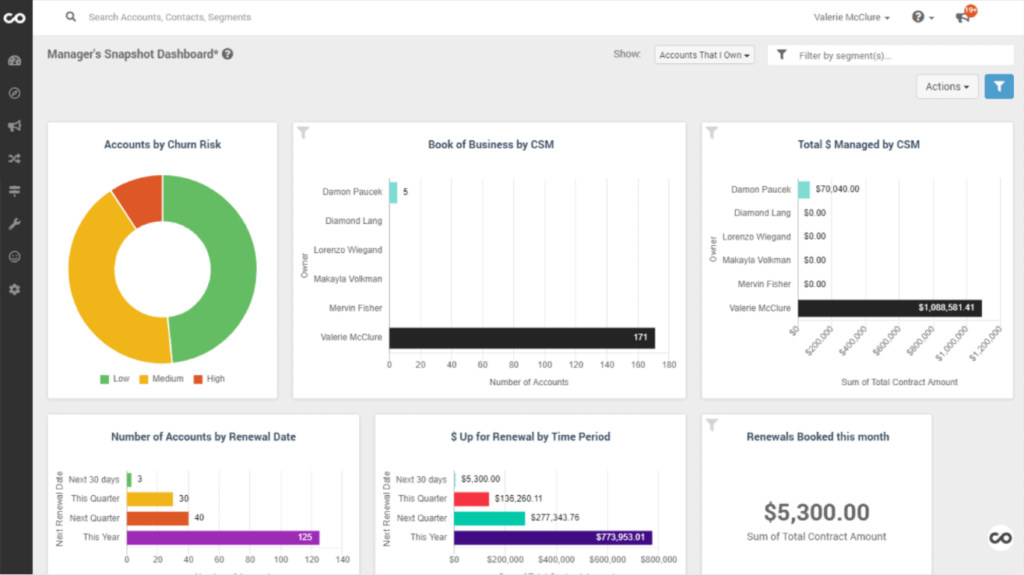
ChurnZero is a customer success platform purpose-built to help subscription businesses (especially B2B SaaS) manage customer health and minimize churn. The solution offers a rich set of features centered on churn risk identification and customer engagement.
By consolidating customer data from various sources (product usage metrics, CRM data, support interactions, billing records), ChurnZero creates a holistic view of each account. From this data, the platform generates customer health scores that predict the likelihood of churn or renewal. CSMs can find these scores on a dashboard and instantly see which accounts are green (healthy) vs. yellow or red (at risk).
As customers use your product, ChurnZero can also track key events (login frequency, feature adoption, etc.) and update health scores or trigger alerts when things change. Beyond monitoring, the tool provides features for CSMs to take proactive action. You can set up automated playbooks (if an account’s usage drops by 50% month-over-month, ChurnZero can automatically schedule an email sequence or create a task for the account owner).
ChurnZero integrations:
- Salesforce
- HubSpot
- NetSuite
- Slack
- Microsoft Teams
- Zendesk
- 50+ native integrations
ChurnZero Pricing: ChurnZero doesn’t publicly list pricing. The tool is typically offered as an annual SaaS subscription based on the size of your customer base or features needed. You’ll have to contact ChurnZero for a custom quote. There is no free plan, but you can request a demo.
What ChurnZero is great at:
- Health scoring: Customizable health scoring that takes into account multiple dimensions (usage, support tickets, survey responses, etc.).
- Customer engagement tools: Built-in options to engage customers, such as in-app messages, pop-ups, and triggered emails.
- Churn integration into your CRM: For companies that live in CRM, ChurnZero can feed churn insights right into those systems.
Churn Zero areas of limitation:
- Requires data alignment. To get the most from ChurnZero, your various data sources need to be connected and accurate.
- Learning curve for full features. ChurnZero is packed with features, which can be a lot for a small CS team initially.
- Primarily for CSM-led businesses. If you have a low-touch or tech-touch customer model, some strengths may be less relevant.
5. Pendo (best for churn risk scoring for SaaS)
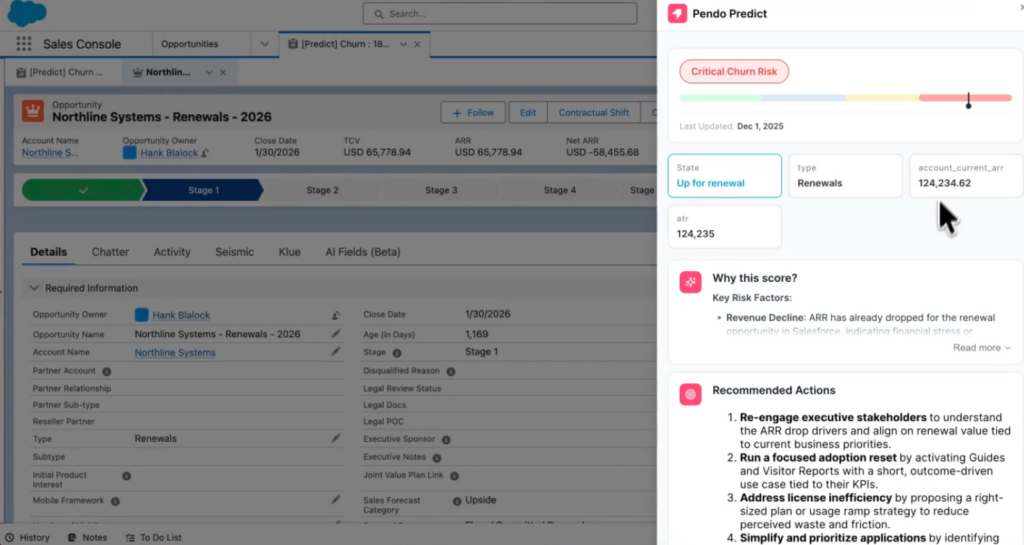
Pendo is a product analytics and customer experience platform that helps SaaS teams understand how users engage with their product, where adoption drops, and which accounts may be at risk of churn. With Pendo Predict, the platform uses AI models and product usage data to forecast churn risk, surface revenue at risk, and help customer success or product teams intervene before customers disengage.
Pendo is especially useful for SaaS companies that want to connect churn prediction with product behavior. Instead of relying only on support tickets or CRM notes, teams can track usage patterns, feature adoption, onboarding progress, retention trends, and engagement signals inside the product. If an account stops using key features, shows declining activity, or fails to reach important adoption milestones, Pendo can help flag that customer as a churn risk.
Beyond analytics, Pendo also helps teams take action. You can use in-app guides, surveys, NPS, product feedback, and customer journey data to understand why users are struggling and guide them toward the right features or workflows. This makes Pendo a strong fit for product-led SaaS businesses that want churn prevention to be tied directly to user behavior and product adoption.
Pendo integrations:
- Salesforce
- HubSpot
- Zendesk
- Slack
- Jira
- Segment
- Snowflake
- Microsoft Teams
- APIs and webhooks
Pendo pricing: Pendo offers a free plan for small teams, with paid plans available through custom pricing. The free plan supports up to 500 monthly active users, while larger teams need to request pricing based on product usage, MAUs, and selected features.
What Pendo is great at:
- Product usage-based churn signals: Pendo helps teams identify churn risk based on real product behavior, not just lagging revenue or support data.
- AI churn prediction: Pendo Predict can forecast churn risk and highlight accounts that may need proactive intervention.
- In-app engagement: Teams can use guides, surveys, and product messaging to re-engage users before churn happens.
- Strong fit for product-led SaaS: Pendo is useful for companies where feature adoption, onboarding, and engagement are key retention drivers.
Pendo areas of limitation:
- Not a pure churn platform: Pendo is broader than churn prediction, so teams looking only for churn modeling may find parts of the platform unnecessary.
- Pricing can scale up: Paid plans are custom-priced and may become expensive for companies with high monthly active user counts.
- Best results require clean product data: To get accurate churn insights, teams need proper tracking, clear adoption milestones, and meaningful product usage data.
6. Hotjar (best for UX/UI-focused churn reduction)
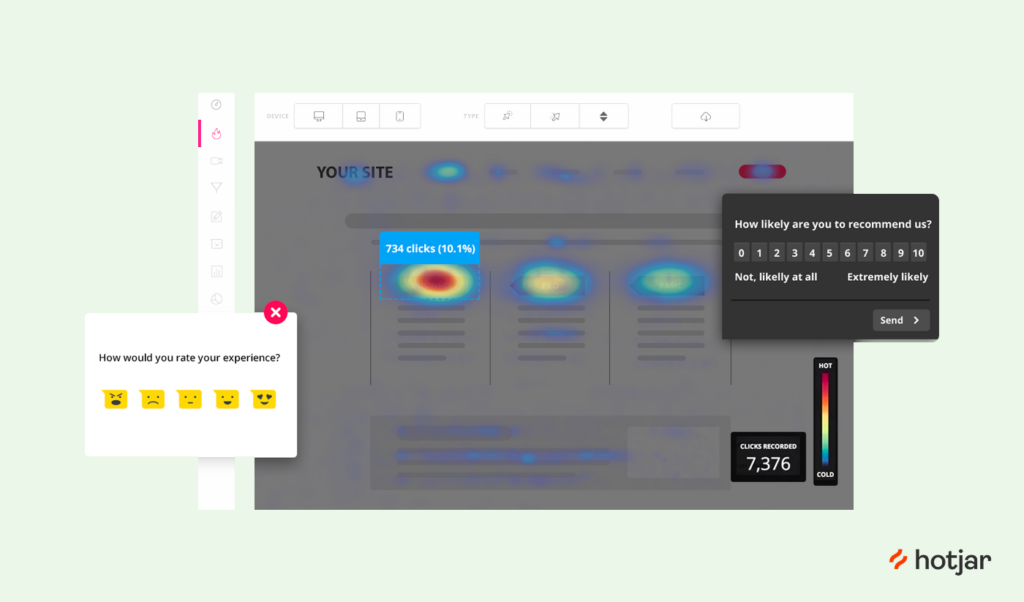
Hotjar isn’t a churn tool per se, but a popular user analytics and feedback platform that helps you understand website and product experience, which is often directly linked to churn. Hotjar equips you with visual and behavioral insights to identify where users get frustrated or disengaged in your digital product.
The tool’ss signature feature is session recordings. You can watch real recordings of users interacting with your website or app, seeing exactly where they click, scroll, or hesitate. If customers consistently struggle on a particular page or drop off at a certain step, that’s a churn indicator.
Hotjar also provides heatmaps and click maps that aggregate user behavior data, showing which parts of a page get attention and which get ignored. Areas of low engagement could signal confusion or lack of value. Additionally, Hotjar has built-in survey and feedback tools (on-site polls or feedback widgets) to capture users’ thoughts in the moment. While Hotjar doesn’t output a churn probability score, it gives qualitative and quantitative data that product managers and marketers can translate into churn reduction strategies.
Hotjar integrations:
- Google Analytics
- WordPress
- Shopify
- ClickFunnels
- Contentsquare platform connection
Hotjar pricing: Hotjar merged with Contentsquare, so it follows Contensquare’s pricing structure. You can use Hotjar for free to test the tool or go with the Growth plan ($39/month when billed annually). Pro and Enterprise plans are availble upon consultation.
What Hotjar is great at:
- User behavior insights: Hotjar gives you an unparalleled window into real user behavior. You can literally see what users do, uncovering churn causes that numbers alone might miss.Voice of customer at scale: Feedback polls and surveys let you hear directly from users.
- Complements churn modeling: Hotjar data enhances a churn prediction program by adding qualitative context.
Hotjar areas of limitation:
- Not a predictive model. Hotjar doesn’t algorithmically predict “who will churn.” It’s more of a diagnostic.
- Web/app only. If much of your churn risk lies outside your website/app, Hotjar won’t address that directly.
- Users reviews say filtering and segmentation can feel limited at scale.
7. Qualtrics XM (best for voice of customer and feedback driven-churn)
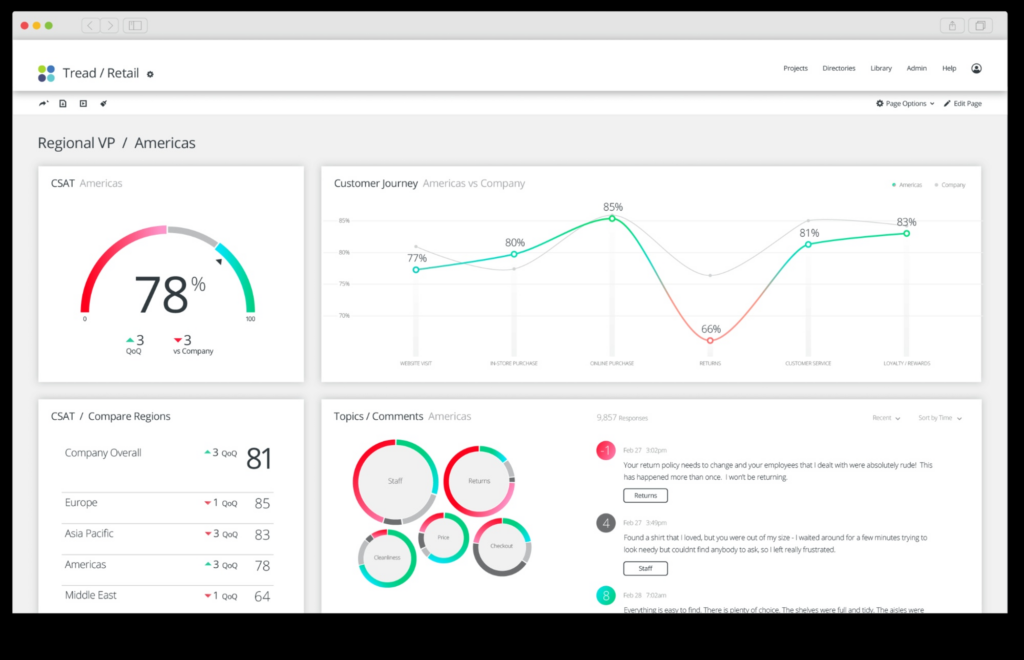
Qualtrics XM (Experience Management) is a platform for understanding and improving customer engagement. The tool plays a strong role in churn prediction by focusing on customer feedback and sentiment. While Qualtrics is best known for surveys and Net Promoter Score (NPS) capabilities, it also includes analytics to identify customers at high risk of canceling.
Qualtrics collects signals like NPS responses, CSAT scores, support feedback, and product usage data, then uses these to pinpoint unhappy buyers who might leave. Its NPS feature helps you track follow-up with detractors (low scorers) in real time, since those are likely churn candidates.
Qualtrics XM leverages machine learning on combined operational and experience data to predict churn risk and suggest next steps. The platform can automatically flag when a customer’s feedback metrics deteriorate and create tasks for your team to intervene. If a customer gives a poor satisfaction rating, it can trigger an alert or email to a manager to reach out and remedy the situation.
Qualtrics XM integrations:
- Salesforce
- HubSpot
- Zendesk
- Slack
- API and developer portal
Qualtrics XM pricing: Qualtrics pricing is custom-quoted and not publicly disclosed. Costs depend on the number of users and survey responses or modules you need. Expect to engage with their sales team to scope your needs and get a quote.
What Qualtrics XM is great at:
- Voice-of-customer analytics: Qualtrics excels at capturing customer sentiment via surveys, reviews, and more, giving rich qualitative context to churn risk.
- NPS and feedback loop: Top-notch for NPS programs. Qualtrics can identify detractors and help convert them by automating follow-ups and escalation workflows.
- Multi-channel insights: Qualtrics gathers data from websites, mobile apps, email campaigns, contact centers, and more, offering a unified view of customer health across channels.
Qualtrics XM areas of limitation:
- No out-of-box “plug and play.” To use it for churn prediction, you’ll need to design the program (surveys, metrics, triggers) to fit your business.
- Less focus on product usage data. If your churn signals are mostly in product usage, Qualtrics might need integration with other tools.
- Cloud-only, no on-premise option.
8. Vitally (best for product-led startups and CS team collaboration)
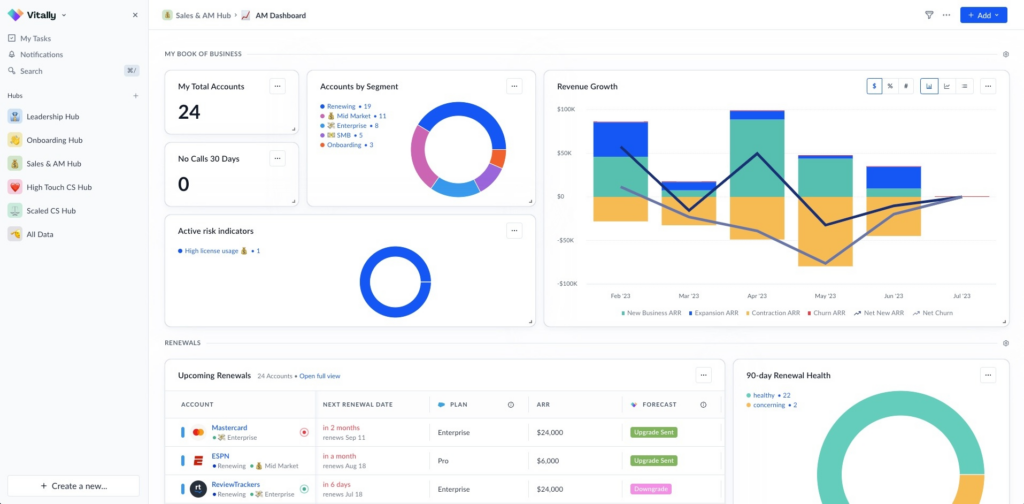
Vitally is a customer success platform tailored for modern SaaS teams, especially those operating with a product-led growth approach. The tool combines customer success management with a strong SaaS churn analytics prediction and prevention backbone. Vitally’s goal is to create a collaborative workspace for CS teams while providing real-time visibility into customer health.
The tool tracks customer interactions across various platforms (your app/product, emails, support) and aggregates them into one view. Using this data, Vitally computes health scores and alerts to signal which accounts might be at risk of churn.
What sets Vitally apart is its focus on automation and productivity for CS teams. The platform offers project management-like features (tasks, notes, playbooks) alongside churn analytics. As soon as an account is flagged as at-risk, Vitally can automatically create an action item for the CSM or trigger a pre-defined workflow.
Vitally integrations:
- HubSpot
- Zendesk
- Intercom
- Jira
- Mixpanel
- Snowflake
- Stripe
- Segment
- Zapier
- Vitally REST API and Analytics API
Vitally pricing: Vitally offers three plans (Tech-Touch, Hybrid-Touch, and High-Touch), but you need to request a quote for each of them based on your customer success model.
What Vitally is great at:
- Real-time health monitoring: The platform updates customer health scores continuously as new data flows in.
- Customer communications: Manage customer touchpoints, from scheduling QBRs to sending automated check-in emails.
- Built for product-led and SaaS models: Can track individual user behaviors, not just account-level.
Vitally areas of limitation:
- Relatively new entrant. Might not have the same depth of features as older platforms.
- Focus on mid-market. Very large enterprises might find Vitally less comprehensive than something like Gainsight or Pecan AI.Onboarding needed to set up health formulas and integrate data.
9. Akkio (best for AI modeling for churn)
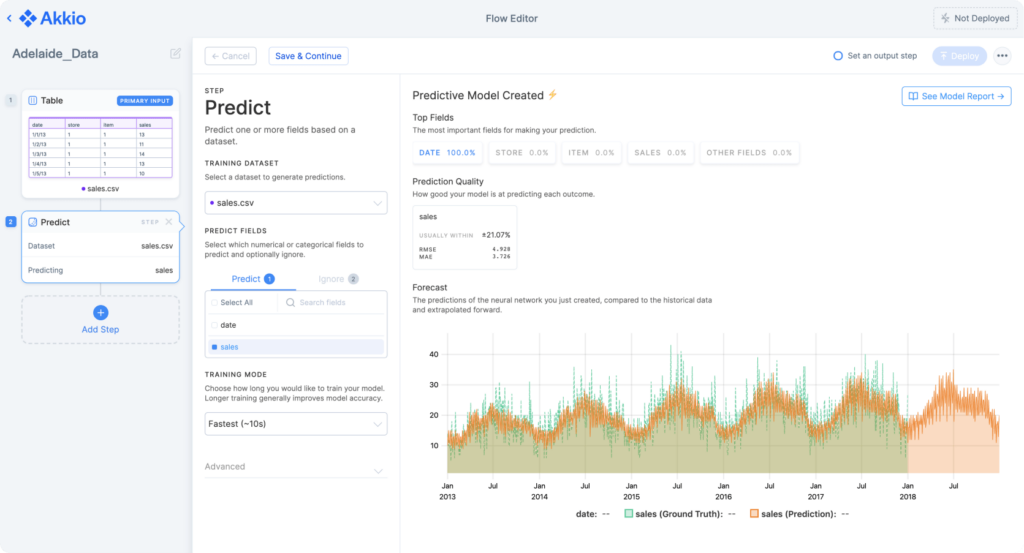
Akkio is a newer entrant that provides a user-friendly AI platform for business predictions, including churn. Think of Akkio as ano-code machine learning tool that you can use to build a model from your business data. For churn prediction, you can feed Akkio your historical customer dataset (with columns for customer attributes and whether they churned), and the tool will automatically train a model to identify those patterns.
Akkio’s emphasis is on simplicity and speed. It automates the ML pipeline, from data cleaning to model selection, and outputs churn risk scores for each customer. You can drag and drop a spreadsheet or connect a data source, and Akkio’s AI will suggest the best predictive model. It also provides insights like which factors are most important in predicting customer churn.
Akkio integrations:
- Google Sheets
- Google BigQuery
- HubSpot
- Salesforce
- Snowflake
- PostgreSQL
- Zapier
- API and web app deployment
Akkio pricing: Akkio’s current official pricing page points to custom pricing for its AI analytics platform. For a quote, you need to contact their sales team.
What Akkio is great at:
- Ease of use: Built for non-technical users. Automated ML features: Akkio handles algorithm selection and tuning automatically.
- Multi-purpose AI tool: Use Akkio beyond churn for forecasting sales, identifying upsell opportunities, or any classification/regression task.
Akkio areas of limitation:
- Not specialized in churn. Akkiowon’t come with churn-specific dashboards or playbooks.
- Limited deep customization. Less control over the model’s innards.
- Data preparation is still on you.
10. Retently (best for subscription businesses focusing on NPS/CSAT)
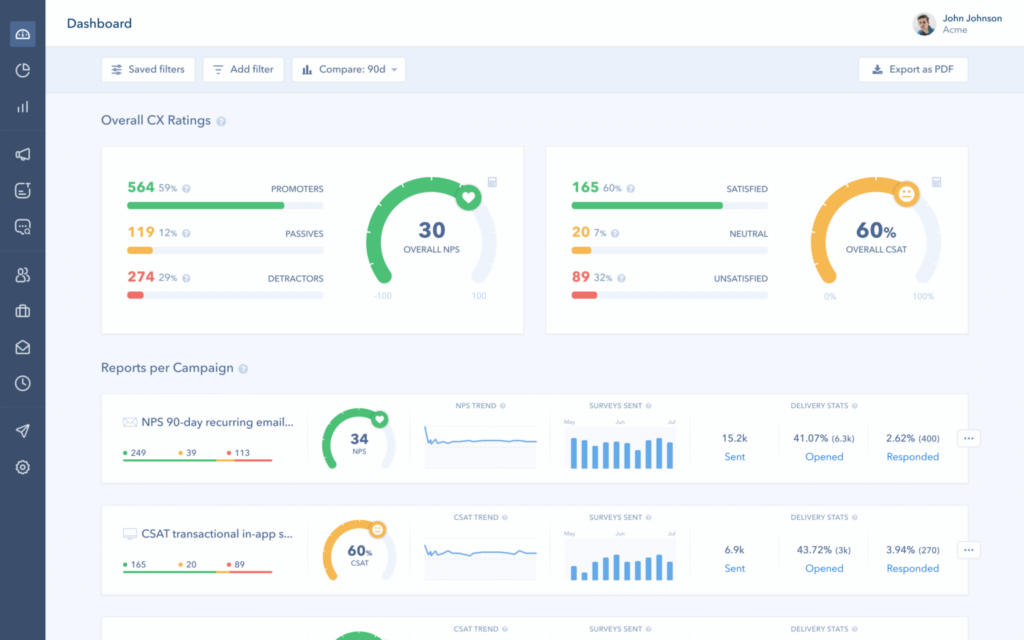
Retently is a customer retention platform with a strong focus on customer feedback and satisfaction metrics to predict churn. The tool is particularly well-suited for subscription-based businesses that use metrics like Net Promoter Score (NPS) or Customer Satisfaction Score (CSAT) to gauge customer sentiment.
The idea behind Retently is that by regularly collecting feedback and sentiment data from your customers, you can foresee who is unhappy and likely to churn, then take steps to improve their experience. Retently uses machine learning to analyze feedback data alongside usage trends to produce customer health scores indicating churn risk. If a customer’s NPS drops or they give a poor satisfaction rating, Retently’s model weighs that heavily in their risk score.
Retently doesn’t just stop at insight. It provides tools to improve customer sentiment. You can set up automated email campaigns for different segments, such as customer winback campaigns for low-engagement users or educational content for those who gave neutral feedback. Retently tracks how these interventions impact your scores over time.
Retently integrations:
- Shopify
- Gorgias
- Klaviyo
- Salesforce
- HubSpot
- Intercom
- Pipedrive
- Zendesk
- Zapier
- APIs
Retently pricing: Retently divides its plans by ecommerce and retail options and a B2B format. The Ecommerce Basic plan starts at $44/month when billed annually, while the Ecommerce Pro goes from $249/month when paid yearly. The Basic plan for businesses goes from $90/month when billed annually and the Pro business option will cost $269/month when paid yearly. All plans include 7 to 14 days free trials.
What Retently is great at:
- Customer feedback-driven: Systematically capturing the voice of the customer through NPS and making sense of it.
- Churn scoring from sentiment: Retently combines sentiment metrics with usage trends for holistic health scores.
- Focused and user-friendly: Retently does one thing and does it well. The interface is straightforward and reporting is clear.
Retently areas of limitation:
- Limited view if not collecting feedback. Accuracy depends on getting customers to respond to surveys.
- Data from other sources might not be as comprehensive.
- Scaling to enterprise (large organizations with millions of users) might find Retently’s focus a bit narrow.
Choose the right churn analytics solution and start predicting
Among all churn prediction software options, Pecan AI stands out for its powerful combination of automated data analysis and predictive modeling tailored to business outcomes. Pecan’s platform offers robust AI and modeling capabilities to analyze customer churn patterns and deliver accurate predictions, all in a user-friendly package.
With a predictive AI agent that understands your business questions in plain English, you can quickly turn raw customer data into actionable churn insights in a way that aligns with your current tools and workflows.
Ready to start predicting churn before it happens and keep your best customers happy? Request a guided demo to get a hands-on tour. Don’t let churn chip away at your hard-earned revenue. Equip your team with the insights to act with confidence and turn potential losses into long-term wins.