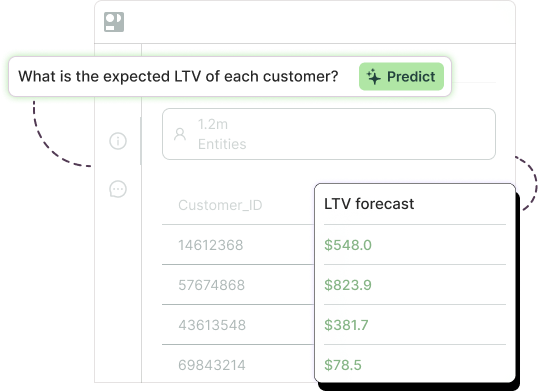
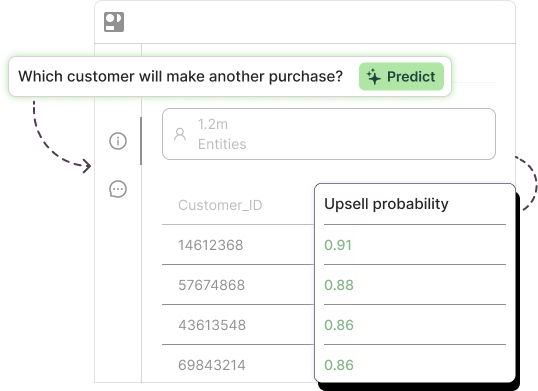
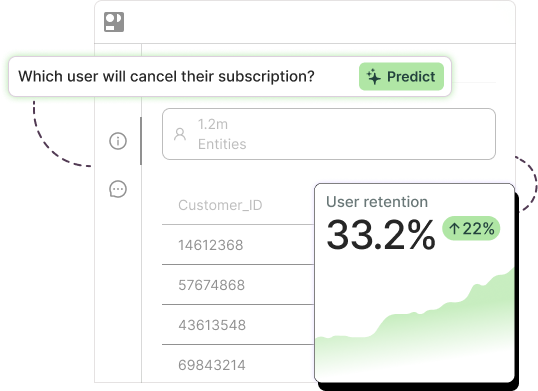
A practical playbook for turning AI from experimentation to execution.
Discover why most organizations fail to scale AI and the framework leading teams use to turn predictive and generative AI into measurable business outcomes.
Over 80% of enterprises will have GenAI in production by 2026, yet most will stall at the pilot stage. As organizations move from experimentation to accountability, the gap between AI leaders and everyone else is widening fast.
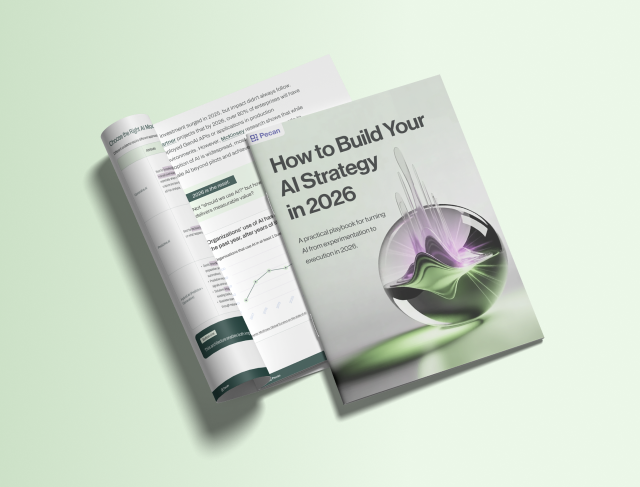
Inside the 2026 AI Strategy Playbook
Informed by industry research from organizations like Gartner and McKinsey, and shaped by real-world implementations, this playbook focuses on what actually works when AI moves from pilots into production.
- Anchor AI to real business pain – Identify which problems are worth solving with AI and which KPIs must move for it to matter.
- Choose the right AI modality – When generative AI fits, when predictive AI is required, and how hybrid systems deliver real value.
- Assess data readiness without waiting for perfection – A pragmatic framework to determine what’s feasible now vs. what needs foundational work.
- A two-phase roadmap from pilots to production – 30/60/90-day quick wins that build confidence, followed by scalable AI capabilities.
- Measure success early and often – Leading and lagging indicators that prove AI is working, technically and financially.
- The operating model that makes AI stick – Ownership, workflows, and analyst-led execution that prevent AI from stalling after launch.
AI success in 2026 won’t come from more pilots, bigger models, or better demos. It will come from clarity on where AI truly adds value, discipline in execution, and a willingness to change how decisions are made day to day.
This guide provides a practical path to move beyond experimentation and turn AI into a repeatable, outcome-driven capability that delivers measurable impact.
Stop building AI as isolated projects. Start building it as a core part of how decisions get made.