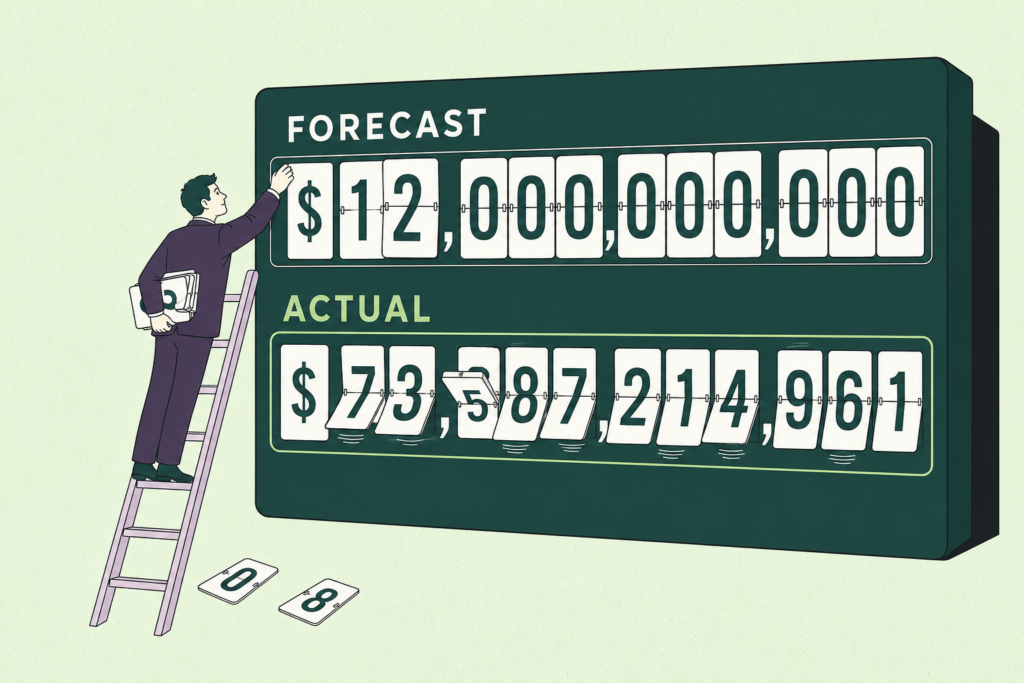
Ask ten supply chain teams how their demand planning is going, and most answer with an accuracy number. “Our forecast is 78% accurate,” they’ll say. “Our MAPE is down to 22 percent”. Accuracy is the scoreboard everyone watches, and it’s the wrong one to obsess over.
A demand plan is only worth the decision it changes. A forecast that sits in a spreadsheet, admired for its precision but never acted on, is expensive trivia. And a large body of forecasting research points to something more uncomfortable than a low accuracy score: much of the manual work teams pour into demand planning, the sales overrides, the consensus tweaks, the gut-feel adjustments made in the monthly meeting, doesn’t improve the forecast at all. A good chunk of it makes the forecast worse than a simple baseline would have been.
That’s the lens we’ll use here. We’ll cover what demand planning is, how the process actually works, the methods teams rely on, and where AI changes the math. Along the way we’ll be honest about which parts of the traditional process earn their keep and which parts are just habits wearing a lanyard.
What is demand planning?
Demand planning is the cross-functional process of forecasting customer demand and using those forecasts to make decisions about supply, production, inventory, and budget. It answers three questions at once: what will customers buy, when, and how much. Then it turns those answers into action.
It lives at the meeting point of several teams. Supply chain wants to hold the right inventory. Finance wants a revenue plan it can defend. Sales wants product available when a deal closes. Marketing wants stock ready before a promotion drives a spike. Demand planning is where those competing interests get reconciled into a single number everyone agrees to work from.
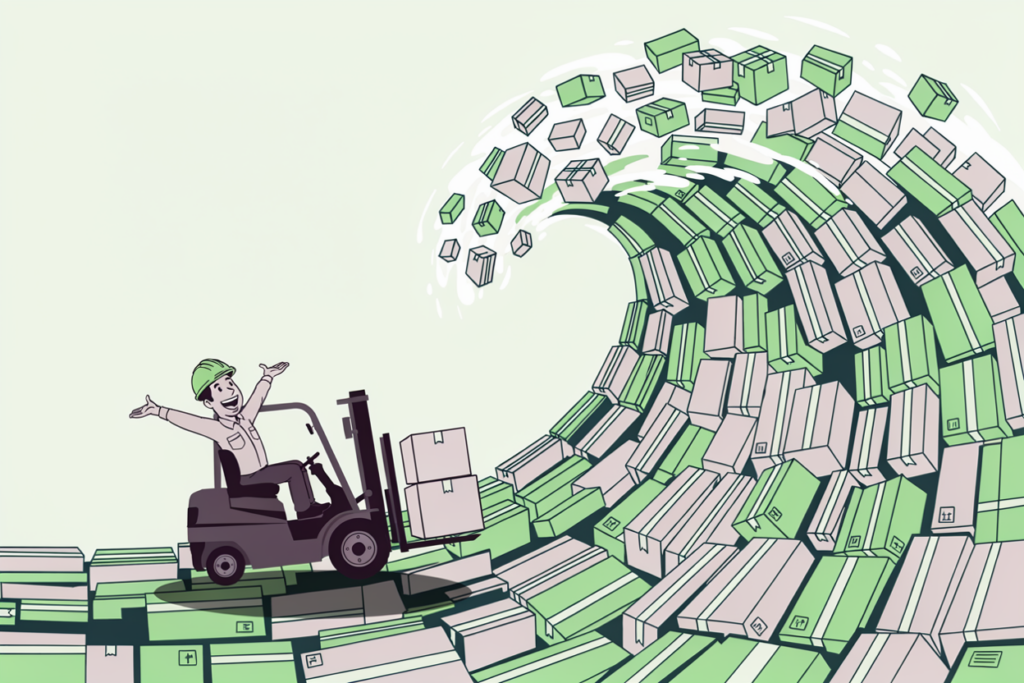
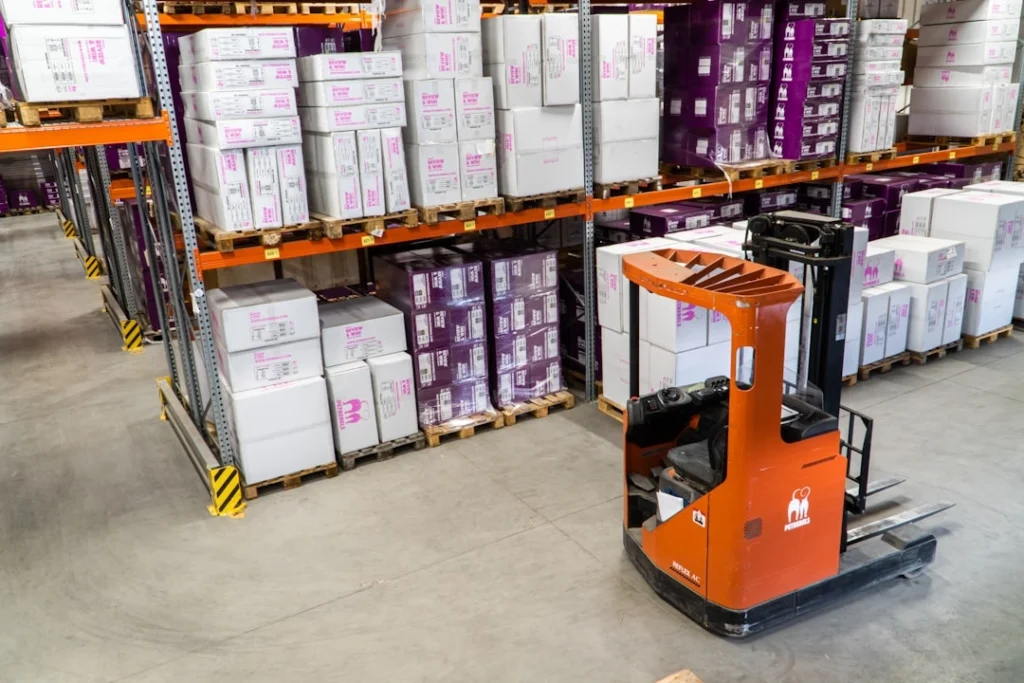
That single number carries more weight than it first appears. Order too much and you’re sitting on overstock that ties up cash and eventually gets marked down. Order too little and you’re out of stock the moment a customer is ready to buy, handing that sale to a competitor. Demand planning is the discipline of being wrong by as little as possible, on the side that costs you least.
Demand planning vs demand forecasting
People use these terms as if they mean the same thing. They don’t, and the gap between them is more than pedantry.
Demand forecasting produces a number: expected demand for a product, in a location, over a period. It’s a prediction. Demand planning is what you do with that prediction. How much to order. Where to position inventory. When to ramp production up or down. How to adjust for a promotion, a price change, or a supplier that just slipped two weeks.
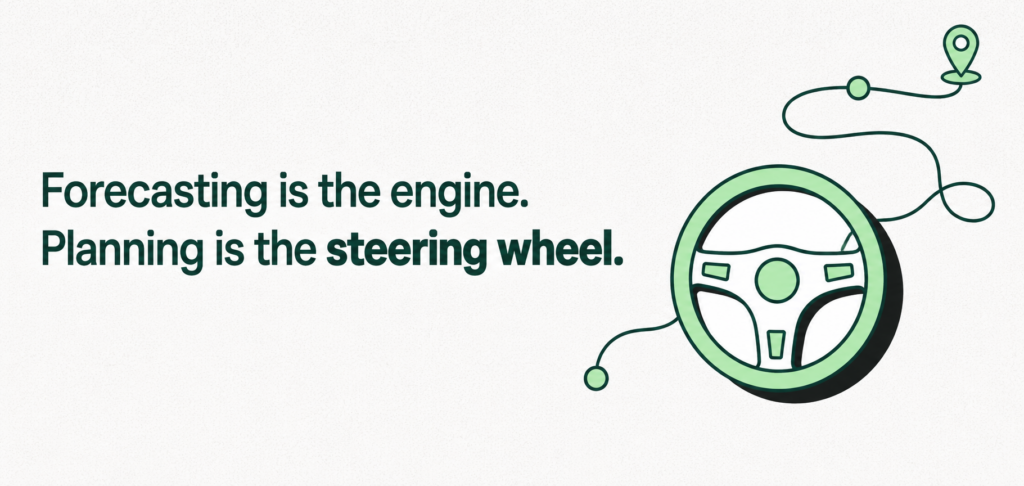
Forecasting is the engine. Planning is the steering wheel. You need both, but they’re different jobs with different owners and different skills. A brilliant forecast paired with sloppy planning still leaves you with the wrong stock in the wrong place. A modest forecast paired with sharp planning often beats it. Teams that blur the two tend to over-invest in forecast precision and under-invest in the decisions all that precision is supposed to serve.
The demand planning process
Most demand planning follows a recognizable sequence. Names vary by company, but the steps look like this, and they loop rather than run once.
Data collection. Everything starts with history. Past sales by SKU and location, the promotions calendar, pricing changes, and outside signals like seasonality, weather, and market trends. The quality of this input sets a ceiling on everything downstream.
Statistical forecasting. A baseline forecast comes next, built from historical patterns. This is the number a model produces before any human touches it. Keep this number. You’ll want it later to check whether anyone’s edits actually helped.
Demand sensing. The baseline gets adjusted with fresher, faster-moving signals: point-of-sale data, web traffic, early order patterns, shifts in how customers are behaving right now. Demand sensing pulls the forecast toward what’s happening this week instead of what happened last quarter.
Consensus planning. Sales, marketing, finance, and supply chain come together to agree on one demand number. In theory this is where human knowledge sharpens the forecast, a rep flags a big deal closing, marketing warns about a campaign nobody logged. In practice, it’s also where a lot of accuracy quietly leaks out, which we’ll come back to.
Scenario modeling. Good planning stress-tests the plan before reality does. What if a promotion runs two weeks longer? What if a key supplier slips? What if the new launch outperforms and you’re caught flat? Each scenario carries an inventory and cash implication worth understanding in advance, not in hindsight.
S&OP integration. Finally, the agreed forecast feeds the sales and operations planning cycle, where it becomes procurement orders, production schedules, and financial commitments. This is the handoff from planning to execution, the point where a forecast stops being a spreadsheet and starts moving real product. Teams that wire forecasting straight into production planning tend to run leaner, because the number that gets agreed is the same number that gets built.
Common demand planning methods
The step where you generate that baseline forecast can use several methods. Each fits a different situation, and picking the wrong one is a common way good teams end up with bad numbers.
Qualitative methods rely on human judgment: sales input, expert opinion, market research. They earn their place when there’s no history to model, a brand-new product, a new market, a first-of-its-kind promotion. The weakness is obvious. Judgment is subjective, and it leans optimistic, especially when someone’s quota is riding on the number.
Time series methods (moving averages, exponential smoothing, ARIMA) project the future from patterns in the past. They work well for stable, repeating demand. They struggle the moment the past stops predicting the future, which happens more often than any plan accounts for.
Causal and regression methods connect demand to its drivers: price, weather, promotion spend, economic indicators. When demand has clear external causes, these models catch relationships that pure time series methods miss entirely.
Machine learning methods train on every available signal at once, across thousands of products and locations, and surface patterns no human would spot by hand. They’re the most accurate option for complex, high-volume demand, and they cut manual effort dramatically. The old trade-off was that they needed data scientists to build and babysit. That’s the part that’s changed, and it changes a lot.
Why traditional demand planning breaks down
Plenty of companies know their demand planning isn’t working. They just can’t always name why. A few reasons show up again and again.
Spreadsheets don’t scale. A model that works for 50 SKUs falls apart at 5,000 across 20 locations. The math is the same; the volume isn’t. Manual processes hit a wall, and that wall usually sits right around the point where planning matters most.
Static rules miss real shifts. Rules written last year assume last year’s customer. When behavior changes, from a new competitor, a price shock, a change in buying habits, fixed rules keep cheerfully forecasting a world that no longer exists.
Siloed data keeps teams misaligned. When marketing’s promotion calendar and supply chain’s forecast live in systems that never speak, the two plans drift apart. Then the promotion drives a spike nobody stocked for, and everyone blames the forecast.
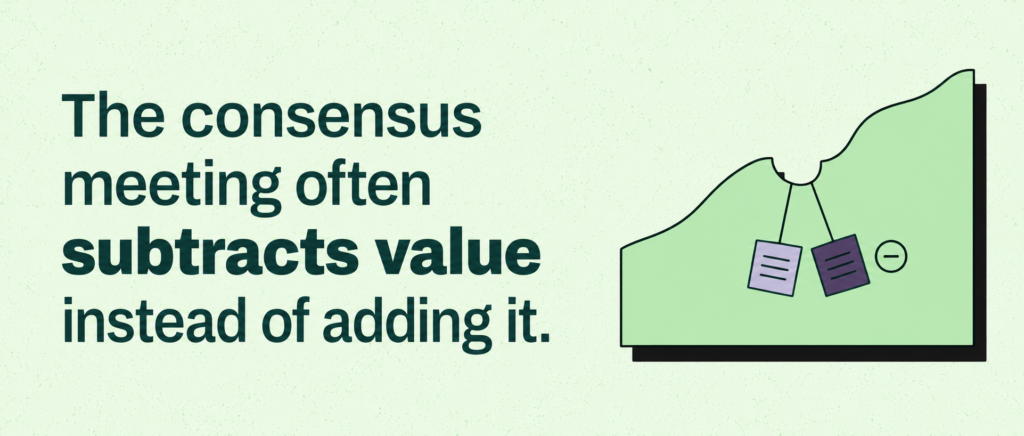
The consensus meeting often subtracts value instead of adding it. This is the uncomfortable one. Forecast Value Added analysis, a method popularized by forecasting expert Michael Gilliland, compares each step of your process against a naive baseline, roughly, what you’d get by assuming next period looks like the last one. Study after study using this approach lands on the same finding: a large share of manual overrides fail to beat that baseline, and many actively make accuracy worse. An MIT supply chain analysis put it plainly, noting that these overrides often fail to improve the final forecast and, at their worst, seriously hurt business performance. The tweak made to hit a financial target, the small adjustment to an already-accurate number, the optimistic bump from sales, each one can quietly degrade a forecast the model already got right.
None of this means human judgment is useless. It means judgment should be measured, not assumed. If you’ve never checked whether your process beats a naive forecast, forecast accuracy is the first place to look, and the results tend to be humbling.
AI-powered demand planning
AI changes the economics of the whole process. Not by adding a smarter opinion to the consensus meeting, but by taking most of the manual work off the table entirely.
AI demand planning uses machine learning to automate the forecasting step, take in far more signals than any manual method can hold, and produce predictions granular enough to act on, by SKU, by location, by week. A few things shift when that happens.
The baseline builds itself. Models trained on your full sales history replace hand-built spreadsheet formulas, and they refresh as new data lands, so the baseline is never stale by the time you look at it.
Demand sensing runs continuously. Instead of a monthly refresh, models take in live signals and adjust forecasts as conditions move. The forecast tracks reality closely rather than lagging a month behind it.
Scenarios run in minutes. Testing hundreds of what-ifs by hand takes weeks, which is why most teams never really do it. A model runs them while you’re still in the meeting, so scenario planning becomes something you actually practice instead of something you mean to.
Outliers get caught automatically. A one-time bulk order, a data-entry error, a freak weather event, these distort a manual forecast for months. AI models flag and correct for them, so one strange week doesn’t poison next quarter’s plan.
Planners plan instead of wrangle. This is the part that matters most. When the model owns the baseline and the busywork, planners spend their hours on the calls only they can make: which risks to hedge, which scenarios to prepare for, where the forecast genuinely needs a human and where it doesn’t.

For years, this level of automation meant hiring data scientists and waiting months for models to reach production. That’s the barrier we built Pecan to remove. Pecan’s Predictive AI Agent lets business teams ask a demand question in plain language, then handles the data preparation, model building, and validation on its own, and pushes predictions into the tools teams already use. No code. No data science team. Models running in about a week instead of a quarter.
If demand planning is where you’re starting, a few related reads go deeper. Our primer on predictive analytics explains the engine underneath, our guide to AI demand forecasting covers the prediction step in detail, and if you’re weighing options, our rundown of demand forecasting software is a useful map. When you want to see it on your own data, our demand forecasting solution is the place to begin.
Demand planning best practices
A handful of habits separate teams that trust their demand plan from teams that fight it every month.
Measure value added, not just accuracy. This follows straight from the point above. Run Forecast Value Added analysis: compare each step of your process to a naive baseline and drop the steps that can’t beat it. If the consensus meeting isn’t improving on the model, that’s not a signal to work harder in the meeting. It’s a signal to change what the meeting is for.
Track accuracy and bias over time. A single MAPE number tells you almost nothing. Trends tell you plenty. Watch accuracy and bias month over month, and watch whether your forecast leans consistently high or low. Bias is usually more fixable than raw error, and more expensive to leave alone. Our guide to demand planning KPIs covers which metrics are worth the effort.
Make it a team sport. A demand plan owned by one analyst and one spreadsheet is fragile, and it walks out the door the day that analyst does. Build a cross-functional process where sales, finance, marketing, and supply chain each own their piece, with clear accountability for the inputs they hand over.
Segment by product velocity. Not every SKU deserves equal attention. Classify products by volume and predictability (A/B/C is the common shorthand) and match your effort to the stakes. Fast movers earn weekly review. The long tail can mostly run on autopilot.
Don’t wait for perfect data. You’ll never have it. The goal is knowing where your data is thin or messy so your process can account for it, not stalling the whole effort until everything is spotless. Modern predictive models handle real-world, imperfect data far better than the spreadsheets they replace, which means the data you have today is usually enough to start.
Getting demand planning right
Demand planning is the backbone of supply chain performance. Get it right and inventory lands where it should, cash isn’t trapped in overstock, and customers find what they came for. Get it wrong and the whole business feels it, in margins, in service levels, in quarters that miss for reasons nobody can quite explain until it’s too late.
The teams pulling ahead aren’t the ones running more consensus meetings or polishing spreadsheets to a higher shine. They’re the ones letting models own the baseline, measuring which human inputs actually help, and spending their planners’ time on decisions instead of data entry. That shift used to require a data science department down the hall. It doesn’t anymore.
Bring AI to your demand planning. See what Pecan can do with your data at pecan.ai.