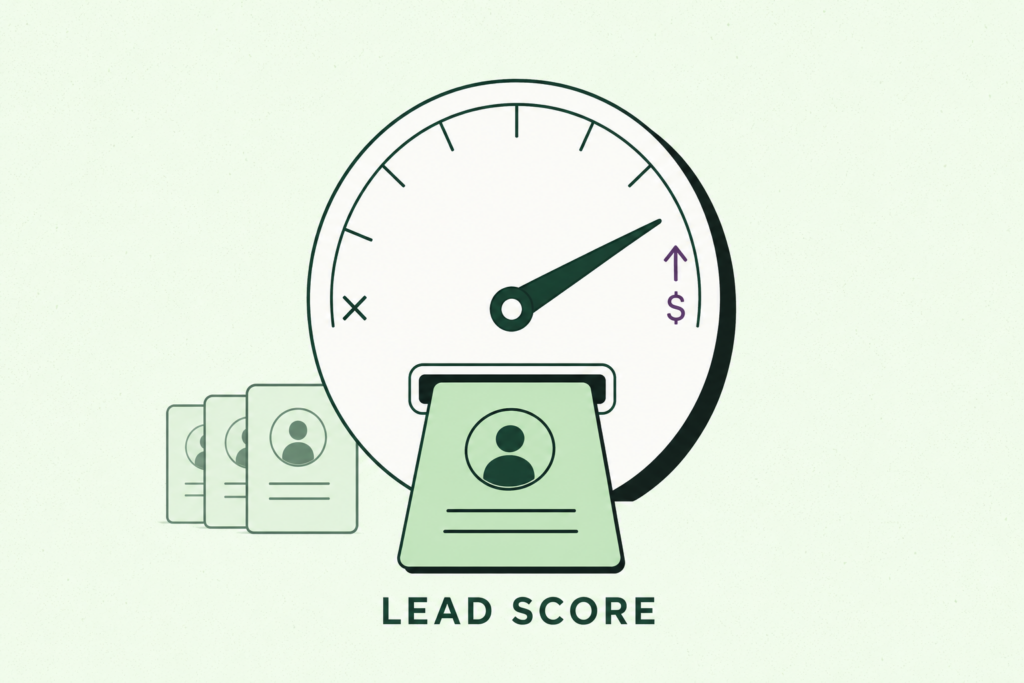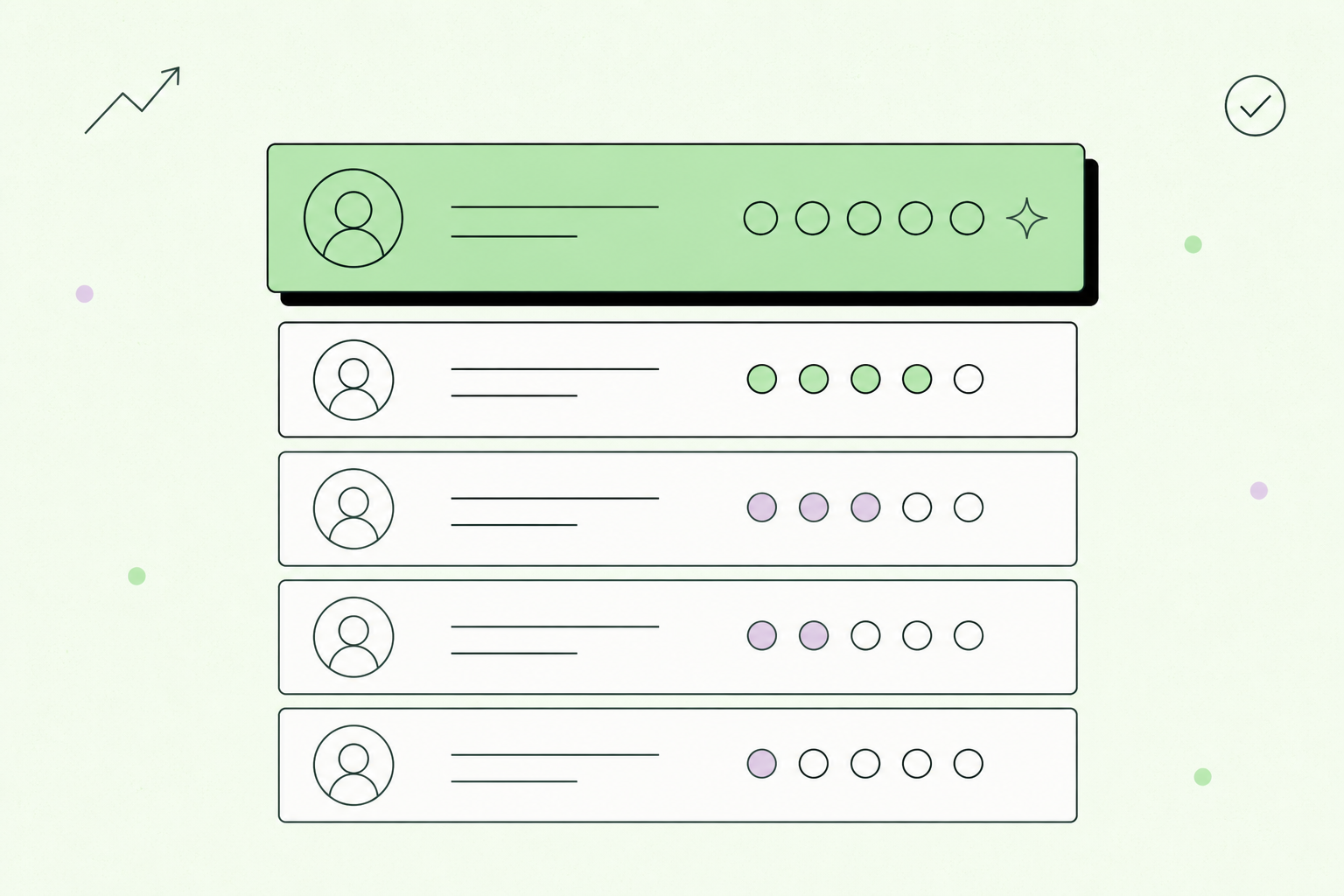
Sales reps spend roughly half their day on leads who’ll never buy. That’s not a productivity problem. That’s a prioritization problem. And it’s exactly what lead scoring software is supposed to fix.

Lead scoring assigns a numerical value to each prospect based on who they are and what they’ve done, so your team can spend its energy on the deals most likely to close. Done well, it cuts wasted outreach, shortens sales cycles, and gives marketing a clearer signal on which campaigns produce real revenue. Done badly, it becomes a spreadsheet nobody trusts.
Two main approaches exist. Rules-based scoring uses points you assign manually (visited the pricing page = +10, opened three emails = +5, works at a company under 50 employees = -20). Predictive lead scoring uses machine learning to find conversion patterns in your historical data and score new leads against them. Most modern platforms blend both, though the balance varies a lot.
We pulled together the 12 best lead scoring tools in 2026 and tested them across categories: AI lead scoring platforms, CRM-native scoring, account-based marketing tools, and SMB-friendly options. Whether you’re hunting for the best lead scoring software for small business or the most powerful predictive option for an enterprise data team, you’ll find a fit here.
A quick note on our angle: we make Pecan, so yes, we lead with it. We’ve also tried to be honest about where it isn’t the right pick.
How we evaluated lead scoring software
Seven criteria shaped this list. We weighted them based on what actually matters once you’ve moved past a vendor demo and started using a tool day to day.
- Scoring methodology. Rules-based, predictive (AI/ML), or hybrid. The right answer depends on your data maturity, not on which sounds more advanced.
- CRM and tech stack integration. Native CRM scoring or standalone, and how it talks to your warehouse, marketing automation, and sales engagement tools.
- Ease of setup and use. Time to first usable score. Whether it requires a dedicated admin or fits into existing roles.
- Explainability. Can a sales rep look at a score and understand why? Black-box numbers get ignored.
- Automation and triggers. A score that doesn’t drive action is just a vanity metric.
- Scalability. Some tools handle 5,000 leads beautifully and break at 500,000.
- Pricing. Entry costs, per-seat versus per-contact models, hidden fees for AI features.

Best lead scoring software at a glance
| Tool | Best for | Scoring type | Starting price | CRM integration |
| Pecan AI | Predictive ML scoring at scale | AI/ML predictive | Custom | Salesforce, HubSpot, any warehouse |
| HubSpot | All-in-one CRM + scoring | Rules + AI (Enterprise) | Free (predictive on Pro+) | Native |
| Salesforce Einstein | Enterprise Salesforce orgs | AI predictive | Add-on to Sales Cloud | Native |
| 6sense | Account-based scoring | Intent + predictive | Custom (enterprise) | Salesforce, HubSpot |
| ZoomInfo | Data enrichment + scoring | Intent + rules | Custom | Salesforce, HubSpot |
| ActiveCampaign | SMB marketing automation | Rules + behavioral | $49/mo entry (scoring tier) | Built-in CRM |
| Marketo Engage | Complex enterprise rules | Rules + AI | Custom (enterprise) | Salesforce, MS Dynamics |
| MadKudu | Product-led growth | Predictive AI | Custom | Salesforce, HubSpot |
| Clay | DIY custom scoring | Rules + custom | $149/mo entry | API-based |
| Warmly | Real-time intent | Intent + behavioral | $700/mo entry | Salesforce, HubSpot |
| Default | Inbound routing + scoring | Rules-based | Custom | Salesforce, HubSpot |
| Freshsales | Affordable AI for SMBs | AI predictive | $9/user/mo entry | Native |
The 12 best lead scoring tools in 2026
1. Pecan AI: best for predictive lead scoring with ML
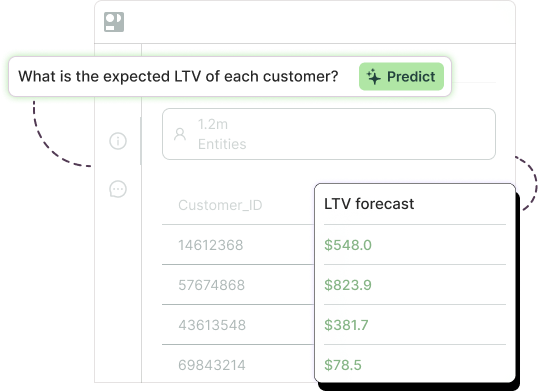
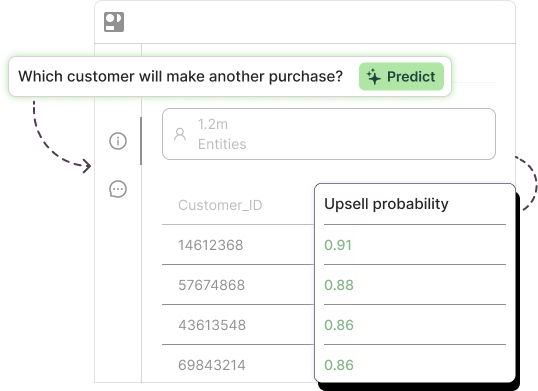
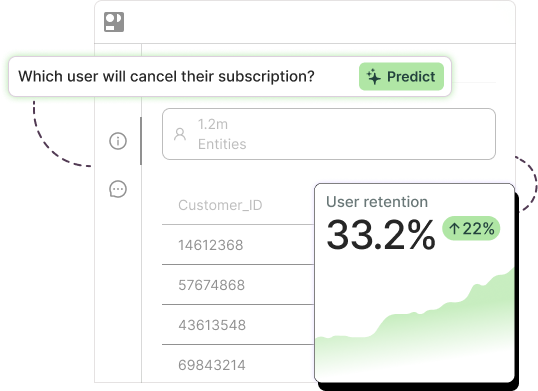
Pecan is a predictive AI platform built for business teams who want machine learning power without hiring a data science team. Our predictive AI agent translates a question like “which leads are most likely to convert in the next 30 days?” into a validated ML model, then pushes scores back into Salesforce, HubSpot, or your data warehouse.
What sets us apart: we automate the parts of predictive modeling that usually slow teams down. Data preparation. Feature engineering. Model selection. Validation. All handled. You ask the question, the agent does the work, and you get explainable scores you can actually defend in a sales meeting.
Across customer deployments, that’s translated into roughly 15% improvement in ROAS for marketing teams and ~10% lift in customer lifetime value for revenue ops. Models reach production in about a week, up to 32x faster than traditional data science cycles.

Key features:
- Automated predictive model building (no code, no Python)
- Explainable scores with confidence intervals and key drivers
- Native integrations with Salesforce, HubSpot, Snowflake, BigQuery, and Redshift
- Continuous model retraining as your data evolves
- Built-in safeguards against data leakage and overfitting
Pricing: Custom, scaled to data volume and use cases.
Pros:
- Genuinely no-code experience for non-technical teams
- Models in production in roughly a week, sometimes faster
- Explainability built into every score, so sales actually trusts the output
Cons:
- Requires meaningful historical data (typically 6+ months of conversion outcomes)
- Custom pricing means it’s not the cheapest option for tiny teams
Verdict: If you’ve outgrown rules-based scoring and want predictive lead scoring that doesn’t require an ML engineer, Pecan is the strongest option on this list. Best fit for revenue ops, marketing ops, and customer success teams at mid-market and enterprise companies. See predictive customer analytics in action.
2. HubSpot: best CRM-native scoring for growing teams
HubSpot’s lead scoring lives inside its Marketing Hub and CRM, so if you’re already using HubSpot for everything else, the integration is essentially free. The platform offers manual scoring (point-based rules you set yourself) and predictive scoring on Marketing Hub Enterprise.
Manual scoring is straightforward and quick to set up. Predictive scoring uses HubSpot’s ML models trained on your historical data, though the model is largely hidden from view, which limits explainability.
Key features:
- Manual scoring on all paid Marketing Hub tiers
- Predictive lead scoring (Marketing Hub Enterprise only)
- Native CRM, marketing automation, and email integration
- Workflow automation triggered by score changes
- Score-based segmentation across the platform
Pricing: Marketing Hub Starter from $20/mo. Predictive scoring requires Enterprise (typically around $3,600/mo).
Pros: Tight integration with the rest of HubSpot. Easy to start. Decent reporting.
Cons: Predictive scoring is locked behind Enterprise pricing. The model is a black box. Less flexible than standalone platforms.
Verdict: Strong choice if HubSpot is already your CRM and you’re comfortable with rules-based scoring. The predictive option is only worth it if you’re already on Enterprise.
3. Salesforce Einstein: best for enterprise Salesforce orgs
Einstein Lead Scoring is Salesforce’s native AI scoring product, sitting inside Sales Cloud. It analyzes your historical conversion patterns, scores new leads, and surfaces the top factors influencing each score. For Salesforce-heavy orgs with a lot of data, it’s the path of least resistance.
The setup looks easy on paper. In practice, getting clean scores out of Einstein often requires data cleanup work that catches teams by surprise. Salesforce’s own research has flagged data preparation as the most challenging part of using Einstein.
Key features:
- AI predictive scoring trained on your Salesforce data
- Top factors view (which signals drove the score)
- Native integration with Sales Cloud workflows
- Einstein activity capture for behavior signals
- Score updates as new data comes in
Pricing: Einstein add-on to Sales Cloud, typically around $50/user/mo on top of Sales Cloud licenses. Enterprise tiers run higher.
Pros: Deep Salesforce integration. Familiar interface for SF admins. Good for orgs with clean, structured data.
Cons: Black-box model. Needs at least 1,000 converted leads in the last six months. Costs add up fast at scale.
Verdict: Solid pick for Salesforce-native enterprises with mature data. Skip it if your data is messy or you want explainability.

4. 6sense: best for account-based lead scoring
6sense scores accounts, not just individual leads, which is exactly what B2B sales teams running ABM motions need. It combines first-party data with third-party intent signals (research activity, technographic data, anonymous web visits) to predict which accounts are in-market right now.
The platform is powerful and expensive. Reviews are mixed. A common critique: 6sense over-promises on intent accuracy, and some teams abandon contracts when the data doesn’t translate to revenue. Worth doing your homework before signing.
Key features:
- Account-level predictive scoring
- Intent data from a large publisher network
- Buying stage prediction
- Salesforce and HubSpot integrations
- Anonymous visitor identification
Pricing: Custom. Generally six figures annually for mid-market and up.
Pros: Powerful for ABM. Good third-party intent coverage. Strong for high-ACV B2B sales.
Cons: Expensive. Multi-year contracts. Setup is heavy. Intent data quality varies by industry.
Verdict: Worth considering if you sell B2B at high ACV and have an ABM motion. Overkill for most other teams.
Want to see predictive scoring built without a data team? Book a Pecan demo and watch a working model come together in minutes.
5. ZoomInfo: best for data enrichment plus scoring
ZoomInfo is primarily a B2B contact and company database, with lead scoring layered on top. The scoring uses firmographic data, intent signals, and your own conversion history. It’s particularly useful if your scoring problem is partly a data quality problem (wrong job titles, missing company size, stale contact info).
Key features:
- Predictive lead and account scoring
- Streaming intent signals
- Contact and company enrichment
- Salesforce and HubSpot sync
- Workflow automation
Pricing: Custom. Typically $15K+ annually, scaling significantly with seats and features.
Pros: Great enrichment. Strong intent network. Fills data gaps that hurt scoring accuracy.
Cons: Expensive. Scoring is secondary to the database. Some users complain about data accuracy in specific verticals.
Verdict: Pick ZoomInfo when your scoring problem is really a data enrichment problem. Pair it with a dedicated scoring platform if you need both.
6. ActiveCampaign: best lead scoring for small businesses
For small businesses and lean marketing teams, ActiveCampaign is one of the best lead scoring software options around. It combines email marketing, marketing automation, and a CRM with built-in lead and contact scoring at prices that don’t break a small business budget.
You can score on behavioral signals (opens, clicks, page visits), profile attributes, deal stage, and custom fields. The scoring is rules-based, which is appropriate for most teams that haven’t yet accumulated the data volume needed for ML scoring.
Key features:
- Lead scoring on contacts, deals, or both
- Behavioral and demographic triggers
- Built-in CRM and email automation
- Score-based automation workflows
- Segmentation tied to scores
Pricing: Plus plan from $49/mo (scoring included). Lower tiers don’t include scoring.
Pros: Affordable. Solid out-of-the-box rules. Easy for non-technical marketers.
Cons: No predictive AI scoring. CRM is lighter than Salesforce or HubSpot. Reporting could be deeper.
Verdict: A genuinely strong pick for small businesses and growing SMBs that need scoring without enterprise pricing.
7. Adobe Marketo Engage: best for complex enterprise scoring rules
Marketo has been the marketing automation standard for B2B enterprises for years, and its lead scoring reflects that. You can build deeply layered multi-dimensional scoring (separate scores for fit, engagement, behavior, and recency) with rules that branch by program, campaign, segment, or behavior.
That power comes at a cost: complexity. Marketo scoring isn’t something you set up over a long lunch. Most teams using Marketo well have a dedicated marketing operations specialist or two.
Key features:
- Multi-dimensional scoring (fit + behavior + engagement)
- Score decay over time
- Predictive content and audiences (with the AI add-on)
- Deep CRM integrations (Salesforce, MS Dynamics)
- Account-based scoring extension
Pricing: Custom. Generally five to six figures annually, with AI features priced separately.
Pros: Extremely flexible. Strong for complex B2B funnels. Mature integrations.
Cons: Steep learning curve. Expensive. Requires ongoing operational lift.
Verdict: Worth the complexity if you’re a B2B enterprise with dedicated marketing ops. Otherwise it’s a sledgehammer where a regular hammer would do.
8. MadKudu: best for product-led growth scoring
MadKudu specializes in predictive scoring for product-led growth motions, where the question isn’t “did they download a whitepaper” but “did they hit a meaningful product usage threshold?” It scores both leads and accounts, blending firmographic fit with product behavior.
It’s a focused tool, and it’s good at what it does. If you’re running a PLG SaaS business, MadKudu often outperforms general-purpose scoring tools because it’s built for the specific signals that matter in PLG.
Key features:
- Predictive lead and account scoring for PLG
- Product usage signal capture
- Salesforce, HubSpot, and Marketo integrations
- Customer fit modeling
- Pipeline forecasting
Pricing: Custom. Mid-market pricing typically starts around $1,500/mo.
Pros: PLG-specific approach. Good model transparency. Strong customer success.
Cons: Niche fit (less useful outside PLG). Smaller integration ecosystem than 6sense or HubSpot.
Verdict: First choice for PLG SaaS companies. Less compelling for traditional B2B sales motions.
9. Clay: best for DIY custom scoring workflows
Clay isn’t a traditional lead scoring tool. It’s a data orchestration platform that’s exploded in popularity with RevOps teams who want to build their own scoring logic, often combining data from a dozen sources (LinkedIn, Apollo, ZoomInfo, web scraping, AI prompts) into custom scores.
If your scoring needs are unusual (industry-specific signals, weird ICP definitions, signals you can’t get from off-the-shelf tools), Clay gives you the flexibility to build it. But you’re building, not buying.
Key features:
- 100+ data source integrations
- Custom scoring formulas
- AI-powered enrichment and research
- Webhooks to push scores anywhere
- Heavy use of LLMs for inference and qualification
Pricing: From $149/mo. Custom tiers for high-volume teams.
Pros: Massive flexibility. Strong RevOps community. Cheap to start.
Cons: You’re the one doing the building. No predictive ML out of the box. Quality depends on your team’s craft.
Verdict: Excellent for scrappy RevOps teams that want full control. Not for teams who’d rather have a finished product.
10. Warmly: best for real-time buying intent scoring
Warmly focuses on warm signals: who’s on your website right now, who just engaged with a sales rep on LinkedIn, who matches your ICP and visited the pricing page yesterday. Its scoring is less about long-term predictive accuracy and more about real-time prioritization.
For sales teams that live or die on response speed, this is genuinely useful. For teams optimizing six-month sales cycles, it’s only part of the picture.
Key features:
- Real-time website visitor identification
- Intent scoring tied to live activity
- Warm outreach automation
- Salesforce and HubSpot sync
- Slack alerts for hot leads
Pricing: Starts around $700/mo. Custom for higher tiers.
Pros: Fast time-to-value. Strong for inbound-heavy teams. Good at the moment-of-intent play.
Cons: Not a full predictive scoring platform. Best paired with another tool, not standalone.
Verdict: A useful complement for teams that already have core scoring in place. Not a replacement.
11. Default: best for inbound lead scoring and routing
Default is a newer entrant focused on inbound lead capture, scoring, and routing. It connects your forms, enrichment, scoring rules, and CRM, then routes the right leads to the right reps automatically. Think of it as the connective tissue between marketing and sales for inbound funnels.
Key features:
- Form-based lead capture and qualification
- Automated enrichment
- Rules-based scoring and routing
- Salesforce and HubSpot integrations
- Round-robin and weighted assignment
Pricing: Custom, with packages typically starting in the low four figures monthly.
Pros: Solid inbound workflow. Faster setup than Marketo. Reasonable pricing.
Cons: Mostly rules-based scoring. Less powerful for predictive scoring needs.
Verdict: A clean pick for inbound-heavy teams that want scoring tied to fast routing. Pair with a predictive tool if you need both.
12. Freshsales: best affordable AI scoring for SMBs
Freshsales (part of Freshworks) is a CRM with built-in AI scoring (Freddy AI) at prices that work for small and mid-market teams. The AI scoring is more capable than HubSpot’s free tier and considerably cheaper than Einstein.
Key features:
- Built-in AI lead and contact scoring
- Native CRM with email, phone, and chat
- Workflow automation triggered by scores
- Sales sequences and engagement tracking
- Affordable pricing across tiers
Pricing: From $9/user/mo. AI scoring on Pro tier ($39/user/mo) and above.
Pros: Genuinely affordable AI scoring. Solid CRM. Quick setup.
Cons: AI explanations are limited. Less flexible than enterprise platforms. Smaller integration ecosystem.
Verdict: A standout option for small and mid-market businesses that want AI-powered scoring without enterprise pricing. One of the best lead scoring tools for budget-conscious teams.
How to choose the best lead scoring software for your team
Picking the right tool isn’t really about features. It’s about matching the tool to your team’s stage, data, and workflow.
Match scoring type to your data maturity. If you have less than six months of clean conversion data, predictive scoring will struggle. Start with rules-based scoring (HubSpot, ActiveCampaign, Default) and graduate to predictive when you have the data to support it. If you have rich historical data and complex sales cycles, the best predictive lead scoring software (Pecan, MadKudu, Einstein) will outperform rules every time.

Decide CRM-native or standalone. CRM-native scoring (HubSpot, Einstein, Freshsales) is convenient and cheap to start, but you’re locked into that CRM’s model and approach. Standalone platforms (Pecan, MadKudu, 6sense) are more flexible, work across CRMs and warehouses, and usually offer better explainability. The tradeoff is integration work.
Consider budget and team size. A small business doesn’t need 6sense. An enterprise probably shouldn’t run on ActiveCampaign forever. The best lead scoring software for small business is usually one that bundles scoring with CRM and automation (ActiveCampaign, Freshsales, HubSpot Starter). Enterprises with complex needs and dedicated ops teams get more value from purpose-built platforms.
Think about explainability. This one matters more than people realize. A score that sales reps can’t interpret will get ignored, no matter how accurate it is. The best software for lead scoring and qualification gives you both the number and the why. Look for tools that show top contributing factors, not just a number.
Match integration to where decisions happen. If your team operates in Salesforce, push scores to Salesforce. If your data lives in Snowflake or BigQuery, pick a tool that writes there too. The score that doesn’t show up in the right place doesn’t drive action.
For more on the broader picture of how predictive scoring fits into a modern sales motion, our guide to predictive sales analytics is a useful next read. And once you’ve picked a platform, the practical walkthrough in how to create a predictive model covers what comes next.
Predictive vs. rules-based lead scoring: which is better?
Honest answer: it depends on your data.
Rules-based scoring assigns points based on rules you write. Visited pricing page = +10. Title contains “VP” = +15. Company has fewer than 50 employees = -20. The math is simple, the logic is transparent, and the setup is fast. What you give up is sophistication. Rules can only encode patterns you already know.
Predictive lead scoring uses ML models trained on your historical conversion data. It finds patterns you didn’t think to look for, weights them statistically, and updates as your data evolves. The cost is a higher bar to entry: you need enough historical data, the model can drift over time, and explainability varies by platform.
| Factor | Rules-based | Predictive (AI/ML) |
| Setup effort | Low (manual point assignment) | Medium (needs historical data) |
| Accuracy over time | Degrades without manual updates | Self-improving with retraining |
| Pattern detection | Limited to known signals | Finds hidden correlations |
| Explainability | High (you set the rules) | Varies (look for explainable platforms) |
| Best for | Early-stage teams, simple funnels | Data-rich orgs, complex sales cycles |
Here’s a clean way to think about it. If you can’t list five clear signals that predict a converted lead in your business today, you’re not ready for predictive scoring (and you have a discovery problem to solve first). If you have those signals plus six months of conversion data, predictive scoring will almost always beat your rules.
For more on understanding what predictive models are actually doing under the hood, see our guide to AI predictive modeling and the related discussion of customer churn prediction software, which uses similar ML approaches applied to retention rather than acquisition.
What is lead scoring software?
How does AI lead scoring work?
What's the best lead scoring software for small businesses?
Can predictive lead scoring work with limited data?
How much does lead scoring software cost?
What's the difference between lead scoring and lead qualification?
How do I build a predictive lead scoring model?
Start scoring leads smarter with Pecan
Most lead scoring tools either give you simple rules (easy but limited) or black-box AI (powerful but opaque). Pecan delivers predictive ML scoring without forcing that tradeoff.
With Pecan, your team can:
- Build predictive lead scores without a data science team
- See exactly why each lead scored the way it did, with top contributing factors
- Push scores into Salesforce, HubSpot, or your data warehouse where work already happens
- Continuously retrain models as your data and market evolve
- Move from question to validated prediction in roughly a week
The teams getting the most out of predictive scoring aren’t the ones with the biggest data science orgs. They’re the ones asking the right questions and pairing them with the right tools. If you’re ready to think about increasing sales productivity with AI, predictive lead scoring is one of the highest-leverage places to start. Book a Pecan demo and we’ll show you what predictive scoring built for your business actually looks like.