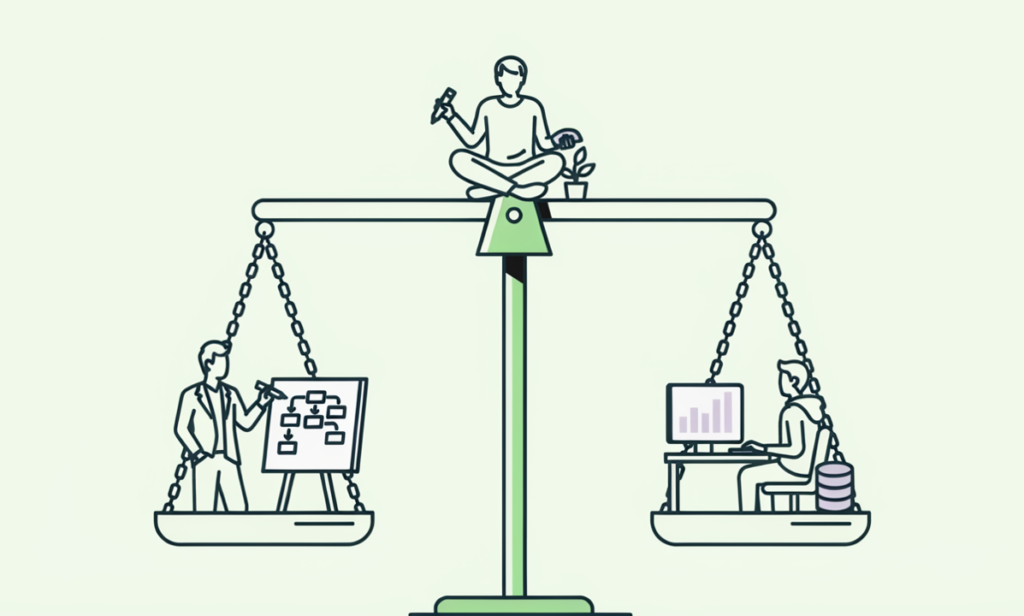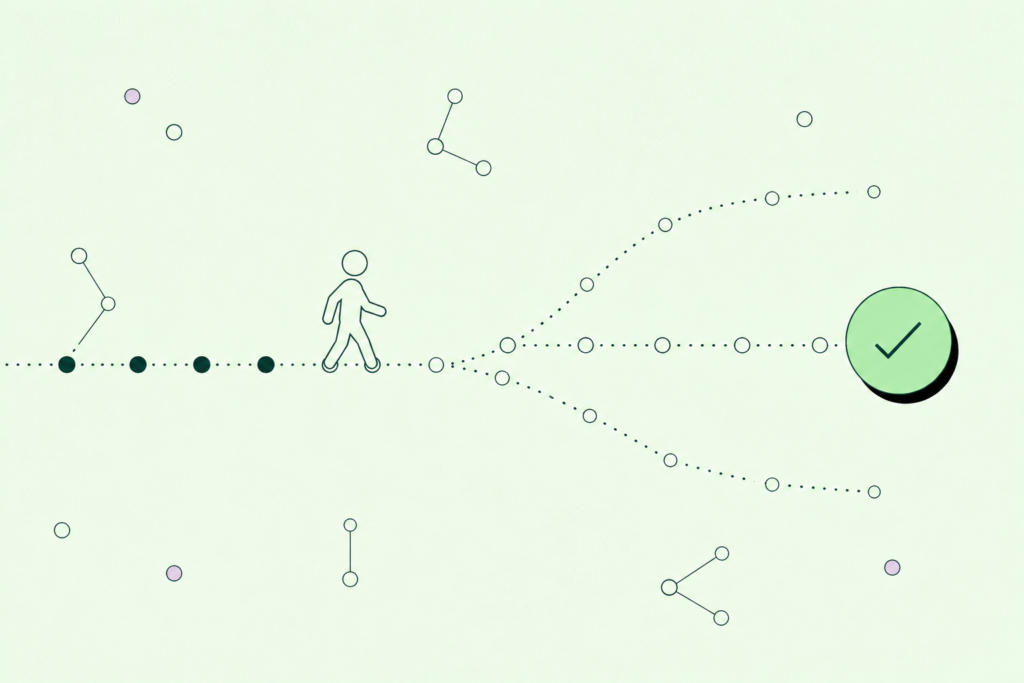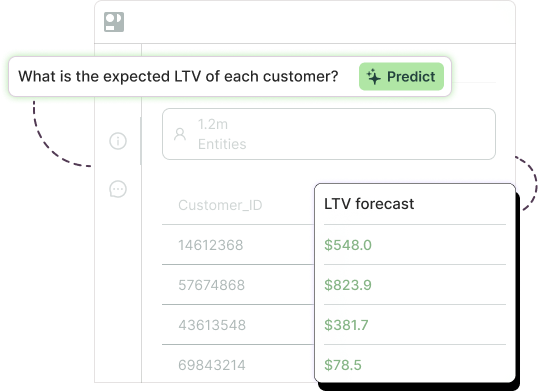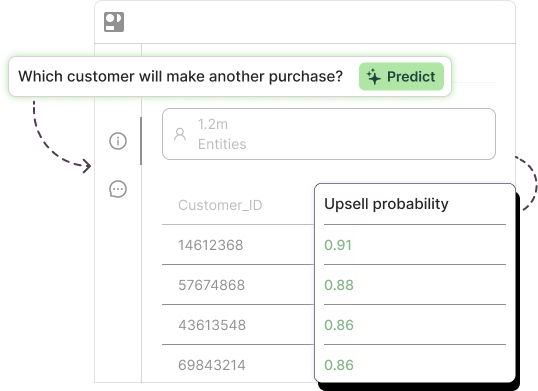
A data-driven strategy is a plan that ties specific, recurring business decisions to specific data outputs on a defined schedule: which decisions, which data, what cadence, and who acts on the result.
Notice what’s missing from that definition: warehouses, dashboards, governance committees. They all matter, and they’re all in service of the loop above. That’s the position this guide takes, and it cuts against most of what ranks for this topic. The common advice equates being data-driven with being data-rich, so companies spend two years building infrastructure and celebrate dashboards shipped. We’d measure something else entirely: decisions changed per quarter. A strategy becomes data-driven at the moment a scheduled decision depends on a data output, and by that standard, plenty of companies with beautiful data stacks aren’t data-driven at all.
The rest of this guide builds that idea into something you can execute: the distinction from a data strategy, a five-pillar framework, a step-by-step roadmap, the culture question, real examples with numbers, and a six-question self-assessment.

What is a data-driven strategy?
A data-driven strategy commits an organization to making its important recurring decisions (budget allocation, retention plays, inventory levels, pricing, hiring) based on evidence from data rather than seniority, habit, or vibes. The key word is recurring. Making one decision with data is just data-driven decision making, a good habit. A strategy is the habit made systematic: the same decisions, informed by the same trusted outputs, on the same rhythm, quarter after quarter.
That’s also the honest answer to what data-driven means in practice. Being data-driven describes behavior at the moment of choice: when the data and the boss’s instinct disagree, the organization has a norm for what happens next. Everything else in this guide exists to make that moment routine instead of heroic.
Which raises an immediate naming problem, because “data strategy” and “data-driven strategy” sound identical and get used interchangeably. They shouldn’t be.
Data strategy vs. data-driven strategy
A data strategy is your plan for the asset: how data gets collected, stored, governed, secured, and made accessible. Architecture, quality standards, ownership, tooling. It answers “how do we manage data well?”
A data-driven strategy is your plan for the payoff: which business decisions the data will inform, and how. It answers “what do we do differently because we have data?”
You need both, and the sequencing trap catches almost everyone: treating the data strategy as a prerequisite you must finish before the data-driven part begins. Finish is a mirage. Data platforms are never done, so companies that sequence this way stay in perpetual preparation. The teams that get value run both in parallel, letting the decisions they care about prioritize which data gets fixed first. Your data and analytics strategy, sitting between the two, should be scoped by decisions, never by an idealized architecture diagram.

The five pillars of a data-driven strategy
Every durable data-driven strategy we’ve seen rests on the same five pillars:
- Data foundation. The decisions you’ve named are backed by unified, accessible, reasonably trustworthy data. Reasonably. Perfect data is a horizon, and messy real-world data supports excellent decisions every day.
- Governance and trust. Clear ownership, quality checks, and privacy compliance, scoped to the data that feeds real decisions first. Governance that blocks usage has failed at its actual job, which is making usage safe.
- Literacy and culture. People across the business can read, question, and challenge data. A data-driven culture shows up in meetings: someone asks “what does the data say?” and someone else is allowed to answer “the data is wrong, and here’s why.”
- Analytics and AI capability. The ladder from reporting up to prediction. Reporting tells you what happened; AI predictive analytics tells you what’s about to happen while you can still act. Most organizations park permanently on the reporting rung, which caps the strategy’s value at hindsight. Tooling matters here, and the honest note about tools: the best AI platforms now let business teams build validated predictive models without hiring for it, which changes what this pillar costs.
- Operating rhythm. The pillar everyone skips, and our whole argument in one line: decisions happen on a schedule, informed by agreed outputs, with results reviewed and fed back. Without rhythm, the first four pillars produce a very expensive library.

A step-by-step data strategy roadmap
Frameworks reassure; sequences ship. Here’s the roadmap we’d give a team starting Monday.
Step 1: Inventory your recurring decisions. List the ten decisions your organization makes repeatedly where being wrong costs real money. Which customers get retention offers. How much inventory to order. Where next quarter’s budget goes. This list, and nothing else, is the scope of your strategy.
Step 2: Audit your data against those decisions. For each decision, ask what data would change the call and whether you have it. Audit against decisions, never against a maturity model. A gap that blocks a named decision is urgent; a gap an architecture diagram frowns at can wait.
Step 3: Pick one decision with money attached. Resist the platform-first instinct. Choose a single decision where a better answer has a measurable payoff inside one quarter. Churn intervention and demand planning are the classic first picks because the money is visible fast.
Step 4: Build the analytical output for that decision. For most first wins, that means a predictive model on data you already have: historical transactions, CRM records, usage logs. The build no longer requires a data science hire; modern predictive analytics tools validate models automatically and fit the timeline of a quarter, comfortably.
Step 5: Ship the output into the workflow. A prediction living in a dashboard is a suggestion; a prediction landing in Salesforce, HubSpot, or the planning system is a decision input. This step separates strategies that work from strategies that present well.
Step 6: Measure the decision delta, then expand. Compare outcomes against the old way of deciding. Publish the result internally, wins and misses both. Then repeat the loop on decision number two, letting each cycle recruit believers for the next.
Six steps, one quarter for the first pass. The companies that struggle are almost never short on data; they’re short on named decisions.
Building the culture and the team
Strategy documents don’t make an organization data-driven. People do, and two forces shape whether they will.
Culture. A data-driven organization is built in small, repeated moments: a leader changes their position in a meeting because the numbers argued otherwise, and everyone watches it happen. That single visible act does more than any literacy program. The reverse is equally true. When data that contradicts the plan gets explained away, everyone learns the real rule: data is decoration. Leaders can’t delegate this pillar, because culture copies what leadership does, never what it says.
Literacy is the enabler underneath. People need enough fluency to ask what a number means, where it came from, and what would make it wrong. Note the direction: healthy data cultures produce more arguments about data, better ones, since challenge is how trust in numbers actually gets built.
Team. Structure matters less than access. The hub-and-spoke pattern works for most mid-sized companies: a small central data team owns the foundation and standards, while analysts embedded in marketing, ops, and finance own decisions in context. What’s changed recently is the height of the technical wall. With model building increasingly automated, the scarce skill has shifted from writing Python to framing a sharp predictive question, and that skill lives in your business teams already. Hire for curiosity about decisions, then give people tools that meet them where they are.
Data-driven strategy examples
The famous examples first, briefly, because they’re famous for a reason. Netflix commissions and renews content based on granular viewing behavior rather than executive taste, a strategy visible as far back as its data-backed bet on House of Cards. Amazon positions inventory across its fulfillment network based on demand prediction, so products start moving toward you before you order them. Both are instructive and both invite the wrong lesson, since neither had to retrofit a data-driven strategy onto an existing way of deciding. The interesting examples are companies that did.
Whistle Express faced churn in newly entered, highly competitive markets. The strategy before: react to cancellations after the fact. Working with Pecan, the team built a production churn model in under two months and reduced churn by 30% in those competitive markets, which changed the strategy itself: marketing now acts earlier, running targeted retention campaigns aimed at customers the model flags before they leave. The recurring decision (who gets retention attention this week) moved from anecdote to model output, on a schedule. That’s pillar five, live.
Clearwave Fiber wanted churn prevention to move at the speed of its growth. The team built a high-accuracy churn model in weeks, deployed live predictions within two months, and cut churn 20x in its highest-risk segment. Look past the headline number at the strategic shift underneath: retention budget now concentrates where the model says risk concentrates, instead of spreading evenly across the base. Same budget, different decision rule, dramatically different outcome.
Neither company started with a Netflix-grade data platform. Both started with a named decision and data they already had, which is exactly the roadmap above.

How mature is your organization? A quick self-assessment
Six yes/no questions. Be strict with yourself; generous scoring only postpones the truth.
- Can you name the five recurring decisions your data is supposed to inform?
- Can people outside the data team get answers from data without filing a ticket?
- Do your weekly or monthly business reviews start from the same agreed numbers every time?
- Has a metric changed a budget or a plan in the last quarter?
- Do you produce any forward-looking output (a forecast or prediction) that someone acts on?
- Does at least one prediction flow automatically into a workflow tool like your CRM or planning system?
0–2 yes answers: you’re at the reporting stage. Data describes the past and decisions happen elsewhere. Start with step one of the roadmap: name the decisions.
3–4: you’re at the analytics stage, and likely stuck at the gap between insight and action. The highest-value move is crossing from descriptive to predictive, and the difference is starker than most teams expect: our comparison of business intelligence vs predictive analytics walks through what changes when your outputs point forward.
5–6: you’re operating predictively, which puts you in rare company. The gap between adopting AI and profiting from it remains enormous: as we cover in our AI maturity guide, MIT research found that 95% of generative AI pilots delivered no measurable P&L impact, and the organizations that escape that statistic are the ones whose predictions reach production decisions. Your next frontier is coverage: more decisions, same rhythm.

The fastest first win is already in your database
Every framework in this guide points at the same starting move: pick one decision, put a prediction behind it, ship it into the workflow. The encouraging part is what that first win requires, which is data you already have. Historical transactions, CRM records, subscription events. Pecan’s Predictive AI Agent turns a plain business question into a validated predictive model on exactly that data, and delivers the predictions where your team already works. Book a demo for a guided walkthrough, and bring your hardest recurring decision with you.
What is a data-driven strategy?
What are the five pillars of data strategy?
What is an example of a data-driven strategy?
What is an example of a data strategy?
What does it mean to be data-driven?