Introduction
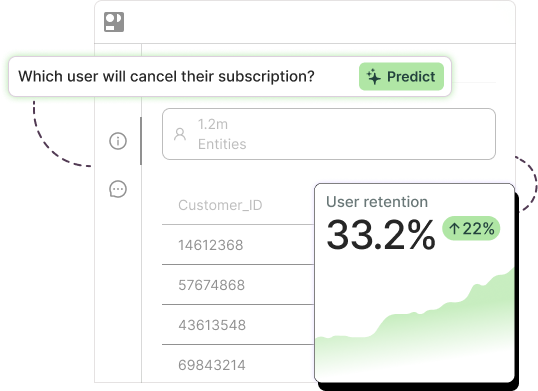
Every business runs on a single quiet question: what are our customers about to do? You can guess. You can wait and see what shows up in next month’s report. Or you can use the data already sitting inside your CRM, warehouse, and marketing platforms to get an actual answer.
That’s the job customer behavior prediction does. With machine learning and AI working together, it spots patterns in how people shop, browse, lapse, and renew, then turns those patterns into forecasts your team can act on. Marketing learns who to win back. Sales sees which leads will close. Finance gets a sharper read on next quarter before it lands.
Below, we’ll walk through how it works, the techniques behind the math, the seven steps to building your first model, and the questions teams ask most often when they’re getting started.
Key highlights
- Customer behavior prediction with AI and machine learning team up to look at your past and present data, then give you a sneak peek at what your customers might do next.
- AI and ML predict customer behavior by identifying patterns in your customer data that indicate churn, conversion, demand, or lifetime value, so you can stay one step ahead.
- Pecan makes it easy to put customer behavior predictions to work by automating your AI model creation and plugging forecasts right into your current workflows.
How does AI- and ML-powered customer behavior prediction work?
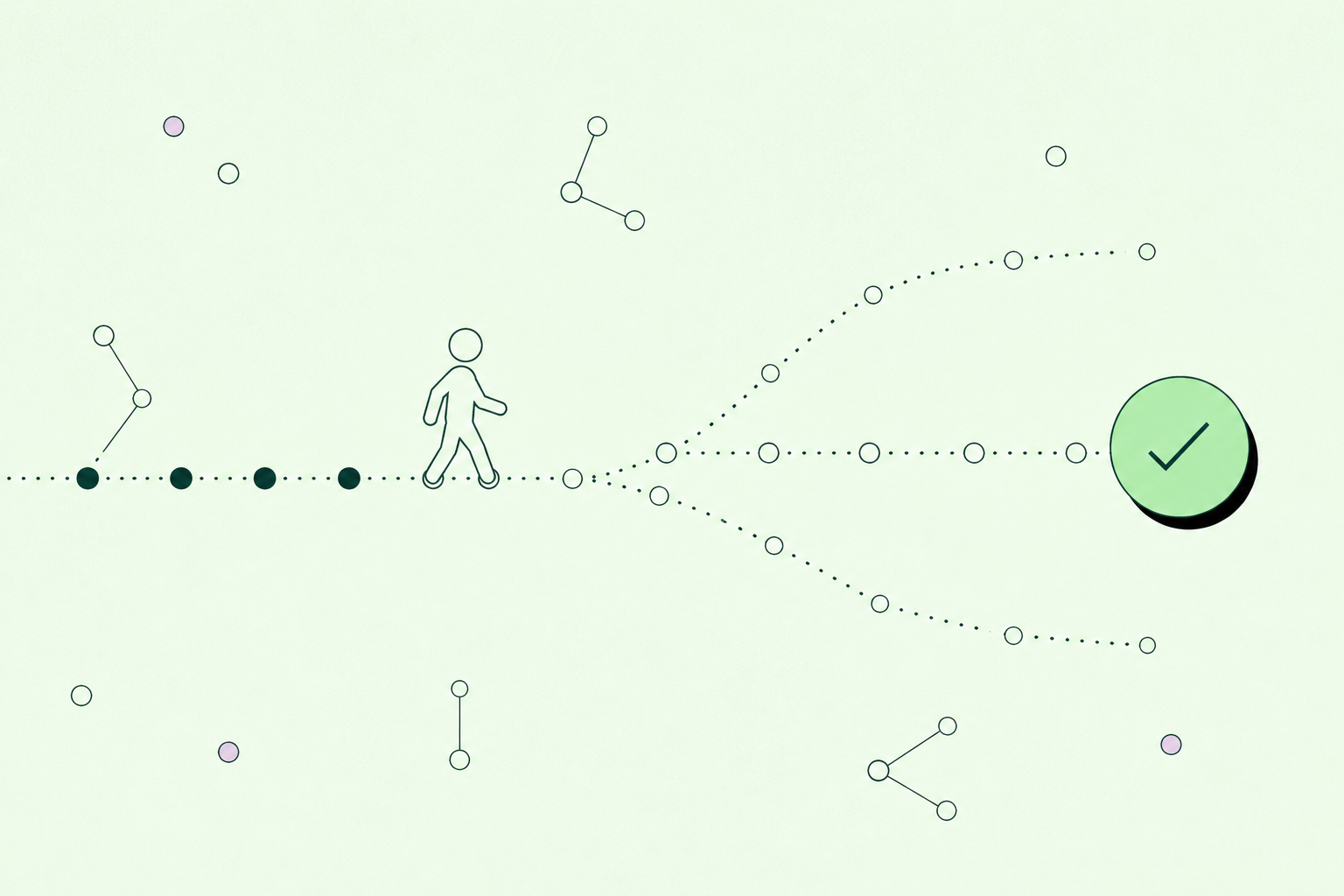
AI and machine learning predict customer behavior by learning from patterns in customer data. Here’s the basic idea: every transaction, click, support ticket, and abandoned cart tells a small story. On its own, a single data point doesn’t say much. Stacked together across thousands or millions of customers, those points reveal patterns that separate buyers from browsers, loyalists from churners, and casual users from your most engaged accounts.
A model studies this historical behavior, figures out which signals matter most for the outcome you care about, and then scores new customers as they appear. The output is a probability. How likely is this person to churn in the next 30 days? To respond to a campaign? To buy a second product? To stick around for another year?
The more data the model sees, the sharper it gets. And because it learns from your specific business, the predictions reflect the quirks of your customers, not a generic playbook borrowed from someone else.
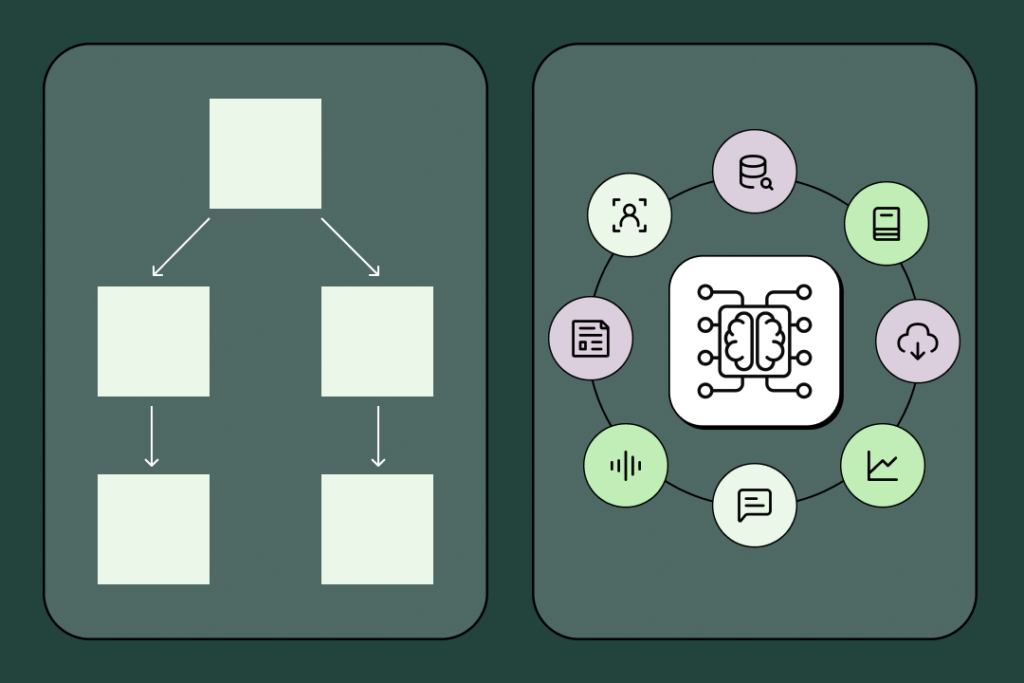
Predictive consumer behavior differs from traditional analytics because AI models can estimate what customers will do next, while traditional tools usually show what customers have already done. Traditional dashboards answer “how did we do last quarter?” Predictive customer analytics answer something far more useful: “what’s likely to happen next, and where should we focus to change it?”
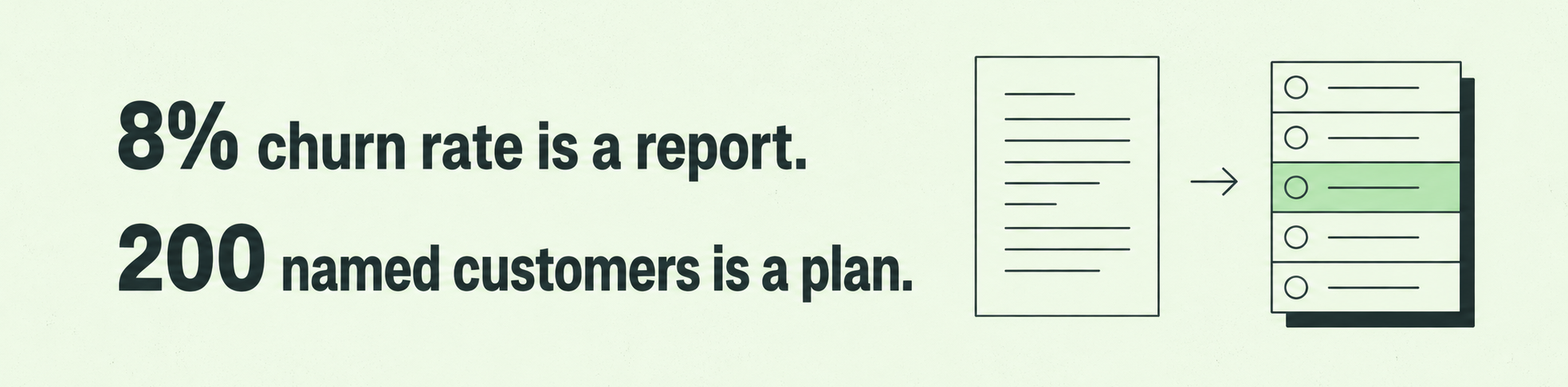
That shift changes how teams operate. Instead of running monthly reports to explain why retention dropped, you get a ranked list of accounts at risk this week. Instead of guessing which campaign segment will convert, you score each contact and prioritize the high-likelihood ones. Data stops being a record of the past. It becomes a tool for planning the next move.
Techniques for customer behavior prediction
Different business questions call for different prediction techniques. Here’s a quick reference for the most common ones:
| Technique | What it predicts | Best used for |
| Classification | Whether something will happen (yes/no, A/B/C) | Churn risk, lead conversion, fraud detection |
| Regression | A specific numeric value | Customer lifetime value, future spend, demand volume |
| Clustering | Natural customer groupings | Segmentation, persona discovery, lookalike audiences |
| Time-series forecasting | Future values over time | Demand forecasting, revenue projection, seasonal trends |
| Recommendation systems | The next best item or action | Cross-sell, upsell, content personalization |
| Survival analysis | When an event is likely to occur | Time-to-churn, time-to-purchase, retention curves |
Most real-world business questions blend two or three of these together. A churn program, for example, might use classification to flag who’s at risk and survival analysis to estimate when they’ll likely leave.
How to predict customer behavior with AI and ML
Customer behavior analytics has gone from “nice to have” to growth engine, and the teams already running it are pulling ahead. According to Adobe’s 2026 AI and Digital Trends report, 56% of top AI-powered marketers and CX professionals already use data and analytics to predict customer needs.

That kind of predictive lift used to be reserved for companies with full data science benches. Not anymore. Modern platforms handle the heavy lifting, so any team with a clear question and a usable dataset can ship a working model in days. Whether you’re trying to flag churn risk in the next 30 days, score leads by conversion likelihood, or forecast demand for next quarter, the workflow follows the same seven steps. Pecan automates most of them – you can explore the full range of predictive solutions here:
1. Choose an AI that helps with predictive modeling for customer behavior
The right platform makes the difference between a project that ships in a week and one that drags on for half a year. Look for an AI predictive modeling platform that handles data prep, model selection, and validation under the hood, so anyone on your team can ship a production-ready model quickly. A few things worth checking: native integrations with your CRM and warehouse, support for the prediction types you actually need (churn, LTV, demand, conversion), and clear explanations for why each customer was scored a certain way. Black-box outputs nobody trusts won’t get used. They’ll just sit there.
2. Connect your data
Predictions are only as good as the data feeding them. Pull together the sources that paint a full picture of your customer: transaction history, product usage, support interactions, marketing engagement, and any first-party demographic info you’ve collected. The more behavioral context, the better your model will perform. Don’t worry about having everything perfect on day one. Even a starter set of three or four core sources can produce useful predictions, and you can layer in more over time as your data maturity grows.
3. Define a prediction target
Be specific. “Predict churn” is too fuzzy for a model to act on. “Predict which subscribers will cancel within 60 days of their renewal date” is something a model can actually work with. A clear target tells the system exactly what to look for and gives your team a metric they can rally around. Sit down with the people who’ll use the predictions, whether that’s CS, marketing, or planning, and define both the question and the action that will follow each score. If no decision changes based on the output, the prediction won’t matter.
4. Let AI handle your data
This is where modern predictive platforms earn their keep. Under the hood, the AI cleans up missing values, builds new features from your raw data (things like average days between purchases, recency of last login, or seasonal buying patterns), and tests dozens of model variations to find the one that performs best on your dataset. Work that used to take a data scientist weeks now happens in hours. You don’t have to know which algorithm got picked or how the feature engineering was done. You just need confidence that the validation steps caught the issues.
5. Review the model output
Don’t deploy anything you can’t explain. A good model will surface the factors driving its predictions: maybe customers who haven’t logged in for 14 days and have an open support ticket are 4x more likely to churn than the baseline. Look at accuracy metrics, sure, but also gut-check the results. Do the top churn risks match accounts your CS team was already worried about? Are the high-LTV scores landing on customers that look like your best historical buyers? When something surprising shows up, dig in. Sometimes that’s a real insight you didn’t have before. Sometimes it’s a data issue worth fixing before you go live.
6. Push customer behavior predictions into action
A score sitting in a dashboard nobody opens isn’t worth much. The point is to get predictions into the systems where your team already works. Send churn scores into Salesforce so CSMs see at-risk accounts in their daily view. Push conversion likelihood into HubSpot so marketing can route hot leads to outreach. Drop demand forecasts into your warehouse so planners can build them straight into their inventory workflows. The closer predictions sit to the actual decision, the more they’ll get used. And the more they get used, the more value the model produces.
7. Monitor and refresh your predictive model
Customer behavior shifts. New products launch, market conditions change, and a model trained on last year’s data will eventually drift out of accuracy. Set up monitoring to track how well predictions match real outcomes over time. Most teams retrain monthly or quarterly, depending on how fast their business moves. Pay attention to whether the model’s top drivers still make sense, and whether new signals (a fresh product line, a recent acquisition, a shifting customer segment) need to be folded in. Treat the model like a living tool, not a one-time project.

Main types of customer behavior models you can take advantage of
Customer behavior models are a team player. Marketing can personalize campaigns, sales can focus on the hottest accounts, and customer teams can keep churn in check. The commercial upside is hard to ignore: according to Twilio’s 2024 State of Customer Engagement Report, consumers spend an average of 54% more on brands that personalize experiences.
Explore types of predictions you can get with AI predictive modeling:
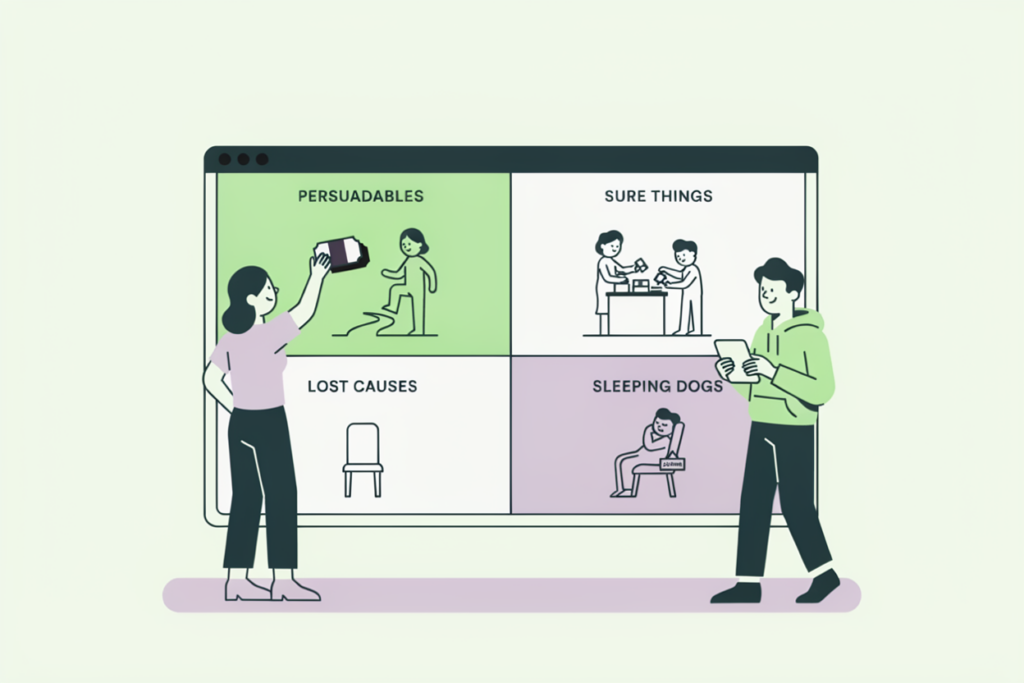
- Segmentation: Group customers by shared traits or behaviors to tailor messaging, offers, and service levels.
- Customer churn: Flag customers likely to leave, so you can intervene early with retention strategies.
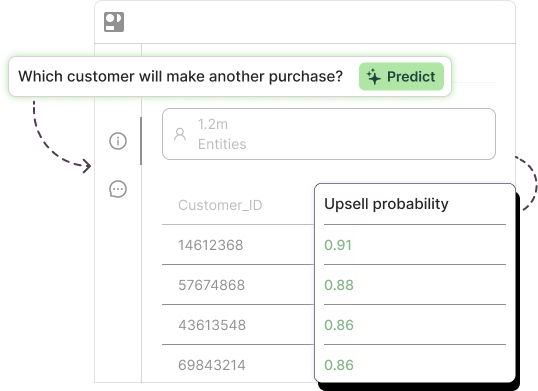
- Cross-sell and upsell: Identify which customers are most likely to buy an additional product, feature, or service.
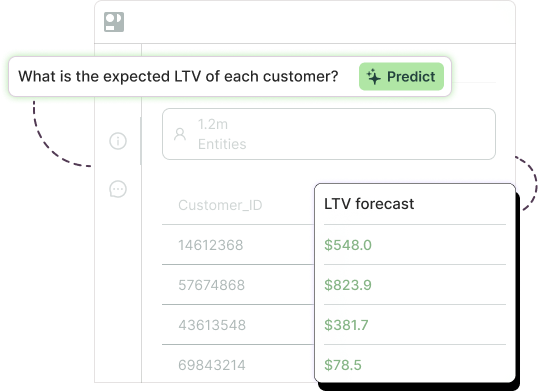
- Customer lifetime value (LTV): Estimate future customer value to allocate spend and service better.
- Recommendation and personalization: Suggest the next best product, message, or action for each customer.
- Conversion propensity: Score which prospects or users are most willing to take a desired action, such as signing up or making a purchase.
- Demand forecasting: Predict future demand at the customer or segment level to support better planning and inventory decisions.

Benefits of predictive customer behavior modeling with AI and ML
Predictive customer behavior modeling lets you stop playing catch-up and start making moves before problems pop up. Here are the main benefits of spotting risks and opportunities in time to act before customers drift away:
- Enhanced personalization: Deliver more relevant offers, content, and outreach based on likely future behavior.
- Proactive churn detection: Spot at-risk customers early and launch retention actions before disengagement starts.
- Optimized customer journeys: Guide each customer toward the next best action across the funnel or lifecycle.
- Accurate forecasting: Plan revenue, demand, campaign performance, and customer growth with more confidence.
- Faster prioritization across teams: Focus marketing, sales, and customer success efforts on the accounts and segments most likely to drive results.
- Smarter budget allocation: Invest in high-value customers, stronger campaigns, and the right moments to engage.
- More consistent decision-making: Use repeatable scores and explainable signals to reduce guesswork across teams.
Challenges in customer behavior analysis with AI and ML
Customer behavior predictions bring a ton of benefits, but you might still need to handle governance, trust, and operational complexity. According to Gartner’s 2024 AI Mandates for the Enterprise Survey, data availability and quality rank among the top AI implementation challenges for both low-maturity and high-maturity organizations.
| Customer behavior analytics challenge | What it means | How to solve it |
| Data privacy | Customer data use can trigger compliance and consent risks | Follow GDPR and CCPA requirements; anonymize sensitive data; encrypt records; document consent policies |
| Data quality | Incomplete, duplicate, or inconsistent records weaken predictions | Standardize data formats; validate inputs automatically; monitor for missing or conflicting data |
| Model transparency | You may hesitate when you can’t explain why a model scored a customer a certain way | Use explainable models and clear driver summaries, so business users can understand predictions |
| Integration complexity | Predictions lose value when you can’t push them into daily workflows | Choose tools with strong integrations across warehouses, CRMs, and marketing systems |
| Over-reliance on automation | You can make poor decisions when trusting every score without review | Keep human oversight for critical actions; set thresholds; review model performance regularly |
Take customer behavior analytics to the next level using AI and machine learning
Customer behavior prediction shouldn’t take a year-long rollout, a roomful of data scientists, or a budget that wipes out your tech spend for the year. Pecan’s predictive AI agent does the modeling work for you. You ask a business question, things like which customers are likely to churn, which leads are likely to convert, or what demand will look like next month, and the agent builds, validates, and delivers a working model. No code. No long waits. Just answers your team can act on.
Pecan plugs directly into the data warehouses, CRMs, and marketing tools your team already uses, so predictions show up where decisions actually get made. And because the platform automates everything from data prep to validation, you can go from question to actionable forecast in days, not quarters.
With Pecan, you can:
- Predict churn risk and trigger retention actions before customers leave (built-in retention analytics and strategies make it easy to act on the scores)
- Score customers for cross-sell, upsell, and next-best-offer programs
- Forecast customer lifetime value to sharpen your targeting and make the most of your resources
- Push predictive insights into your CRM, marketing tools, and data warehouse for action at scale
Whether you’re shopping for customer churn prediction software for your CS team or want to learn how to create a predictive model that any business user can run, Pecan gets you there.
How is predictive consumer behavior different from traditional analytics?
What are the most impactful behavioral signals to track?
Can we predict behavior for new customers with no history?
Start predicting before your competitors do
The teams pulling ahead right now aren’t the ones with the most data. They’re the ones turning data into decisions before competitors notice the shift. Customer behavior prediction is becoming the dividing line between businesses that act on what’s coming and businesses that explain what already happened, and that gap widens every quarter.
If you want to see what predictive customer behavior modeling looks like with your specific data and your team’s use cases, we’d love to walk you through it. Book a demo and we’ll show you how fast Pecan can turn your first business question into a working prediction.

Dror is the VP of Data and Analytics at Pecan AI, where he leads the analytics strategy that powers both customer success and Pecan’s own growth. He joined Pecan as Director of Analytics after years of data leadership roles across tech and fintech, bringing a firsthand understanding of what it takes to make data actually useful for business teams.