In a nutshell:
- Predictive AI can help identify early warning signs of customer churn by analyzing historical data and customer behavior.
- Strategies to reduce churn rates include creating smarter customer segments, personalizing communication, providing proactive support, creating engaging content, and researching upsell opportunities.
- Pitfalls to avoid include neglecting model upkeep, not measuring success, and pouring excessive resources into all segments evenly.
- Hydrant saw a 260% higher conversion rate and a 310% increase in revenue per customer by using predictive AI to identify likely churners and implement targeted campaigns.
As you certainly know by now, one of the major advantages of predictive AI is spotting early warning signs of customer churn. By analyzing historical data and using the power of machine learning, predictive churn models draw back the curtain on warning signs of customer churn.
But while predictive AI can give rich insights into the complex story of customer behavior, it can’t make an impact on its own.
Your team has to put those insights into action — implementing churn reduction strategies that lower churn rates and keep customers happy and coming back for more.
In this article, we dive into how your team can make the best use of your churn risk information. From actionable tips to pitfalls to avoid, this guide will help you incorporate your predictive AI insights directly into your marketing and customer success strategies so you can prevent customer churn.
What is customer churn & how can predictive AI help reduce churn rates?
Customer churn refers to the number of customers who terminate their relationship with your company in a given period. Customer in this context refers to any individual or organization who does repeat business with your company, whether your company is subscription-based or offers POS sales.
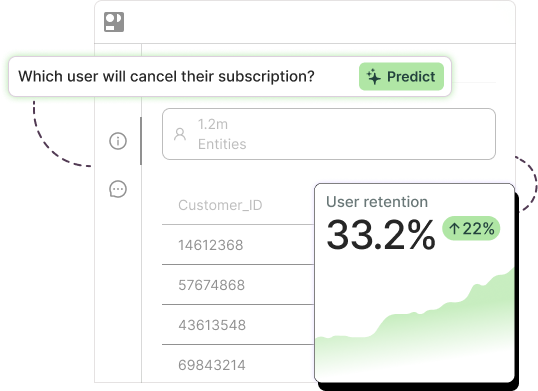
Understanding customer churn is a complex issue because people are complex. While an analysis of historical data can tell you how many customers churned and at what point in their tenure, predictive AI takes this a step further by looking at dynamic factors in customer behavior, like how many times a customer contacted support or logged in, to predict the likelihood of churn for individuals.
Predictive AI identifies churn patterns on a granular level, identifying the precise demographics and behaviors of the customers who are most likely to churn. Predictive models can even rank customers based on their likelihood to churn and expected lifetime value, helping your customer success team prioritize preventative action.
Once you know who is leaving and why, you can optimize your retention and marketing strategies. Simply put, with predictive AI, instead of using data from the past to inform present-day decisions, you can use hyper-focused strategies that deliver better results. You’ll have a rich understanding of your present customers' unique needs and behavior.
Pecan's co-founder and CEO chats about the benefits and challenges of predicting churn with AI
Strategies for putting your churn predictions into action
Marketers and sales reps spend substantial resources acquiring customers, but it’s easy to overlook customer churn, which can be just as important, if not more, for increasing your revenue. Here are some strategies to consider once you’ve taken a look at your churn report.
Predicting churn is the first step on your journey toward proactive customer retention.
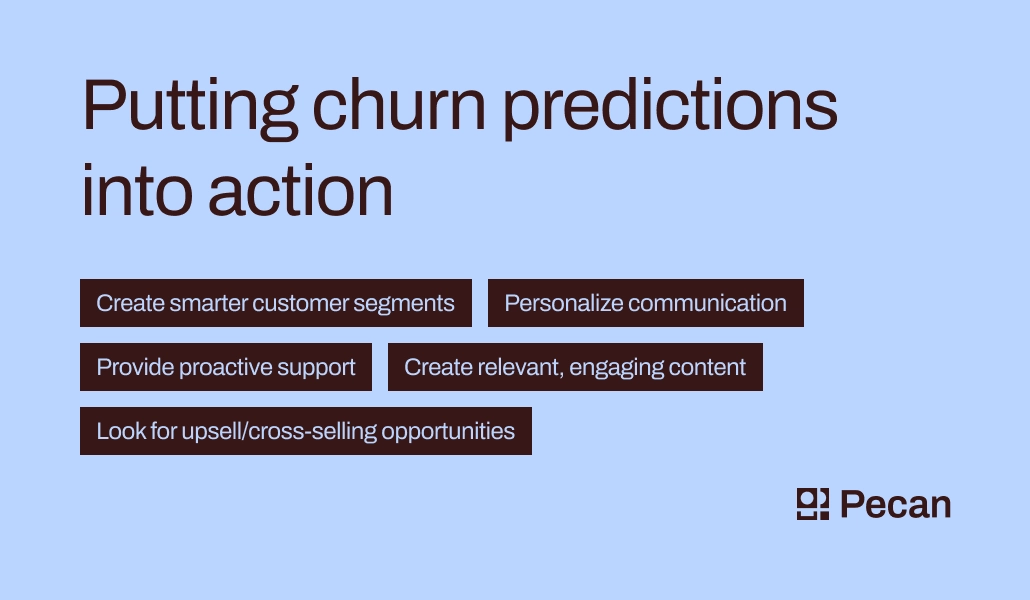
Create smarter customer segments so you can craft targeted retention campaigns
Your churn predictions will give you insights into which individuals are churning and at what rate. But you should also ensure your predictive model groups your customers into granular segments based on specific factors such as their likelihood to churn, key behaviors, and frequency.
Once you do this, you can craft targeted campaigns that speak to each group’s pain points. Smart segmentation can and should equate to effective and profitable customer success campaigns.
Personalize your communication efforts
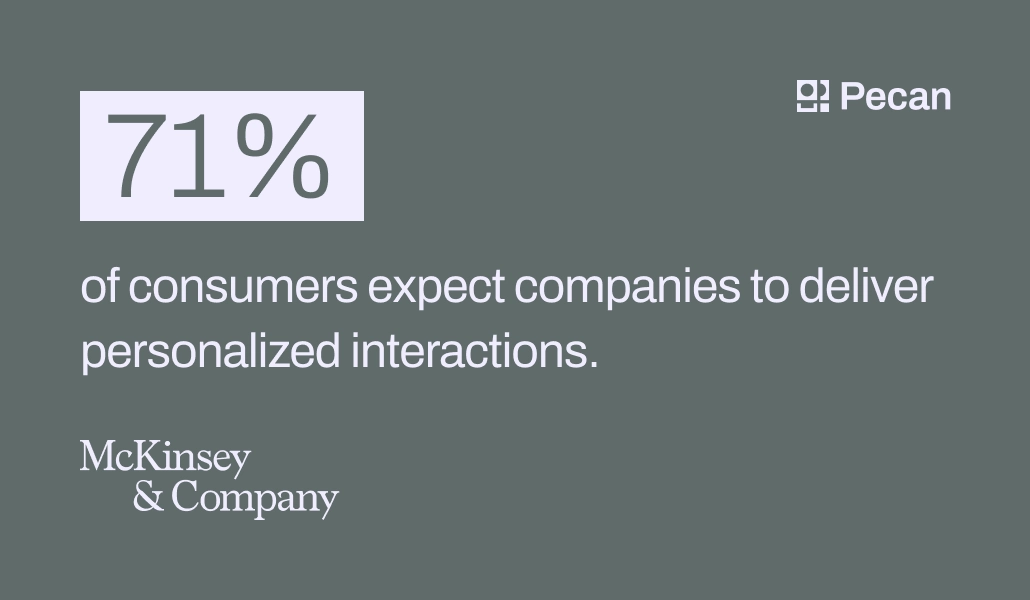
Personalized customer outreach regularly produces better results than generic messaging. In fact, research shows that 71% of consumers expect companies to deliver personalized interactions, while 76% become frustrated when outreach isn’t personalized. Your churn report will highlight vulnerable points in the buyer’s journey that you can use to inform personalized communication.
You’ll also be able to use your predictive insights to better understand what your segments are concerned or skeptical about. When you can identify and address their difficulties, your customers won’t have a reason to churn.
"According to a survey conducted by Dynamic Research, 98% of organizations worldwide either recognize the importance of personalization to their overall business strategy or have made it the backbone of their customer experience operations.”
— “How to Drive More Sales With the Power of Personalized Outreach,” SalesIntel
Keep in mind that personalization doesn’t have to be complicated or even manual. Your team can use automation and AI tools, like generative AI, to quickly draft personalized messages.
A great starting point is to have prewritten email templates where you can change pertinent details based on your customers’ unique information and needs.
Understanding customers' individual churn risk can help you personalize interactions with them.
Provide proactive customer support
Your churn predictions will also likely reveal some areas where your team can improve its product or service. For example, if a large number of customers drop off after the first month, you know that either your game or product isn’t keeping them engaged or isn’t providing the value it promised.
This information can empower your product and customer support teams to provide proactive resources for vulnerable segments. Because you already know what issues are coming down the pipeline, you can provide valuable workarounds and solutions in a timely manner and answer potential questions before your customers have to ask.
Create relevant and engaging content
Your predictive AI model may determine gaps in customer engagement. In doing so, it might become clear to you that your customers aren’t sufficiently educated or engaged with your company or product.
A better onboarding experience could be the fix. Creating engaging content post-sales through newsletters, emails, and blogs that address their needs and provide value can help improve customer retention rates.
You can also automate many of these processes, like onboarding email cadences, to make this seamless and easy, surfacing personalized educational resources based on a customer’s unique needs.
On average, only 38% of customer success processes are automated.
— “State of Customer Success 2023 Report,” Customer Success Collective
Look for upsell/cross-selling opportunities
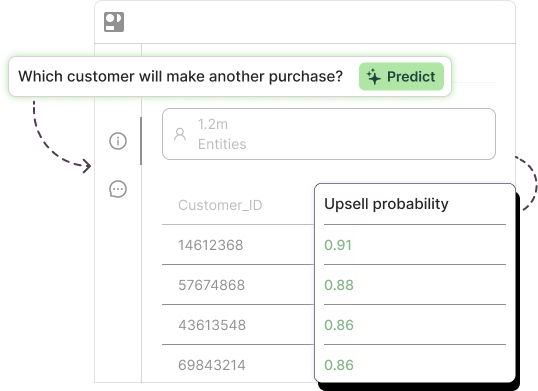
Another way to get the most out of your churn report is to look at it alongside another type of predictive report, such as upselling opportunities. That’s right. You can use predictive AI to identify when and what you should be upselling or cross-selling to your customers. Loyal customers at low risk of churn might be very interested in other products and services you offer. These tactics increase revenue per customer, helping you provide more value to the customers who want and need your services. It’s a win-win.
3 pitfalls to avoid in your churn-prevention strategies
Running a predictive AI model to give you a look at likely future churn rates can have loads of benefits for your company, especially when coupled with effective business and product strategies. However, there are a few things to keep an eye out for as you’re putting your churn results to use.
Neglecting model upkeep
Keeping your predictive model up to date is an important part of preventing customer churn. As you gain more recent and relevant data, continue to plug it into your model so you have updated information about what is and isn’t working.
Updating can be easy. Automated predictive analytics platforms with ongoing data integrations can help you upload your data quickly and frequently, meaning your predictive model will always be working off the most accurate picture of your customers and business landscape.
Not measuring your success
Your predictive model will give you a glance into the future, but your product, marketing, and customer success teams will want to know if their actions are making a difference — and, if so, how much of one.
As you implement strategies to reduce your churn rates, keep track of what changes you’re making in your strategy and the results of those changes. This will help you draw some lines between strategy shifts and better churn results, helping you continuously optimize.
Pouring excessive resources into all segments evenly
It’s tempting to believe that you can prevent all customer churn if you spot the warning signs soon enough. Unfortunately, that just isn’t the case. There are many customers who are going to churn no matter what you do. Likewise, there are other customers who will stay engaged without needing any discounts or deals — you don’t want to waste resources on customers who don’t need to be bought! You’ll have to prioritize and allocate your efforts where they’ll make the most impact. To do this, identify the groups that can be convinced and stand to provide the most return as high lifetime value customers, and then take preventative action to reduce customer churn within that segment.
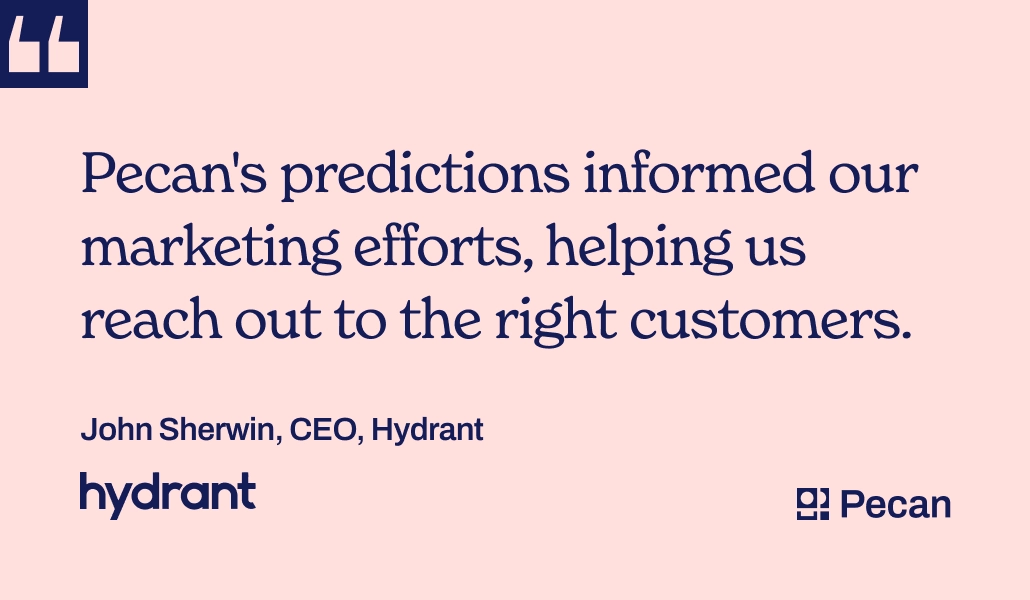
Hydrant used Pecan's churn predictions to inform effective customer winback activities.
Churn prevention strategies in action
Our customers have seen firsthand the impact of predictive AI when coupled with strategic implementation. Hydrant, a consumer wellness product company, used Pecan AI’s predictive modeling to study churn in their customer base.
Their churn report, built in just two weeks, led their marketing team in the direction of email marketing. It’s a big part of their marketing mix, but their emails weren’t segmented properly. Predictive AI helped inform their team about smarter implementation, identifying three things:
- Customers with a high probability of making a repeat purchase
- Customers likely to transition from one-time purchases to subscription models
- Former customers who could be persuaded to make another purchase
They used Pecan’s churn model to identify what customers were most likely to churn. Then, they grouped customers and used specific campaigns to keep the groups that were great investments on their side. They also made informed decisions about upselling.
The result? A 260% higher conversion rate and a 310% increase in revenue per customer. Something to keep in mind: many of the customers that were identified to churn did, in fact, churn (over 83% of the estimated churners).
But this meant Hydrant didn’t waste resources on customers who were halfway out the door. And it means Pecan's predictions were accurate for guiding effective, efficient actions.
Reduce churn rates and keep your customers engaged with our predictive analytics platform
If you’re curious about integrating predictive AI into your marketing mix, consider scheduling a demo with our team. We’ll walk you through our platform and show you how easy it is to use your customer data to see into the future.
If learning-as-you-go is more your style, you can also sign up for a free trial of the tool. Use our Predictive Chat to get started, and see how Pecan can amplify your analytics with AI — especially when coupled with a best-in-class churn reduction strategy and initiatives.