You’ve probably heard “predictive analytics” tossed around in enough meetings to make your eyes glaze over. However, prediction isn’t some mystical data science ritual. It’s just answering business questions before they become business problems.
And you don’t need a PhD to figure out which questions are worth asking.
Stop Staring at Your Dashboard. Start Looking Forward.
Here’s what usually happens: someone in your company builds a beautiful dashboard. Everyone oohs and ahhs at the graphs. Then three months later, you’re still just looking at what already happened while your competitor is busy doing something about what’s going to happen.
Most tools tell you why last quarter sucked. Predictive analytics tells you how to make next quarter better.
One lets you write a really informed post-mortem. The other lets you actually change the outcome.
The Secret: Ask Better Questions
The best predictive projects don’t start with data. They start with a decision you need to make.
Instead of thinking “We have customer data, what should we do with it?” flip it around: “We’re losing customers. Can we figure out who’s about to leave before they actually do?”
See the difference? One is data looking for a problem. The other is a problem that prediction can actually solve.
Here are some real examples from actual companies using Pecan right now:
- A shipping company needs to know which packages will arrive late (so they can avoid late fees of $150 per parcel by activating insurance for it)
- An ecommerce brand wants to predict how many units they’ll sell next month (so they can order the right amount of inventory and not drown in overstock)
- A state agency is predicting which young offenders are most likely to reoffend (so they can direct therapy resources where they’ll actually help)
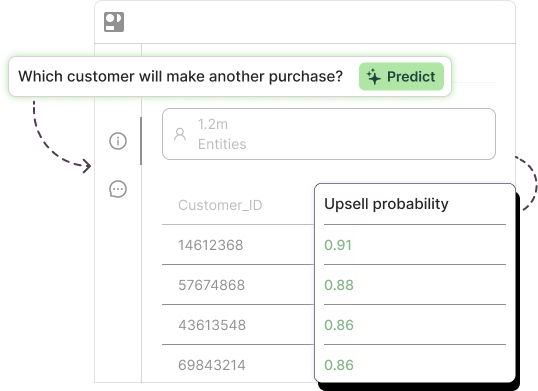
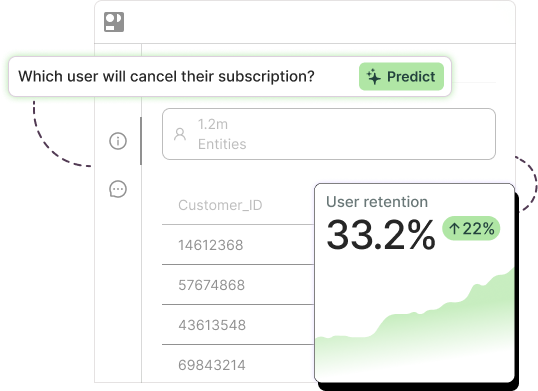
- A subscription business wants to identify which customers are about to churn (so they can intervene with the right offer at the right time)
- A farmer wants to know which cow is likely to get pregnant (so he can optimize milk production).
Notice how each one connects directly to a real decision? That’s the key.
The Only Two Types of Predictions You Need to Know
Okay, now for the tiny bit of technical stuff. But I promise it’s easy.
Every prediction falls into one of two buckets:
1. “How many?” or “How much?” (This is called regression, but you don’t need to remember that)
- How many units will we sell next month?
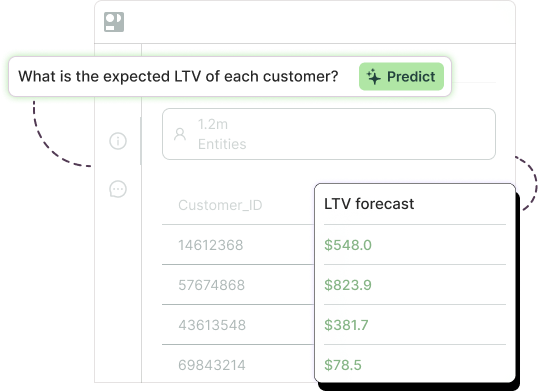
- How much revenue will this customer generate?
- How many days until this package arrives?
- What will our website traffic be next quarter?
2. “Which one?” or “Will it happen?” (This is called classification)
- Will this customer churn? (Yes or no)
- Which leads are most likely to convert? (Hot or cold)
- Will this package be late? (On time or delayed)
- Is this transaction fraudulent? (Legit or sketchy)
- Will equipment break down
- Will a debtor default on his payment
That’s it. One predicts a number. The other predicts a category or outcome.
Why does this matter? Because when you know what kind of answer you need, you can ask clearer questions. And clearer questions get better predictions.
Your Quick Use Case Brainstorm
Grab a coffee (or something stronger, we don’t judge) and walk through these questions. Seriously, this takes about 15 minutes and might change how you work.
1. What decision keeps you up at night?
Think about something you regularly agonize over. Maybe it’s which leads to prioritize, how much inventory to order, or which customers to focus retention efforts on. If getting this right would meaningfully move your numbers, write it down.
2. What would you actually predict?
Get specific. Not “customer behavior” but “will this customer churn in the next 90 days?” Not “sales stuff” but “how many units of Product X will we sell next month in the Northeast region?”
Is your answer a number or a yes/no? That tells you what type of prediction you need.
You probably have more than you think. Transaction history, support tickets, website clicks, purchase dates, usage logs, campaign data. You don’t need perfect data or a pristine data warehouse. You just need signals that might contain answers.
One ecommerce company I know was maintaining massive spreadsheets manually to track attribution across platforms. Turns out that messy data was exactly what they needed to start predicting demand.
4. What would you DO with the answer?
This is the reality check. If you knew which customers would churn next month, what would you actually do? Offer a discount? Have your success team reach out? Switch them to a different plan?
If you can’t answer this question, the prediction won’t be valuable. Every good use case pairs foresight with action.
5. Start small. Think big.
You don’t need to predict everything at once. Pick one question that matters, where you have some data, and where the answer would clearly change your next move. Get that working. Then expand.
Why This Matters Now (Not Later)
Business cycles are getting faster. Customer expectations are rising. Competition is more fierce. The companies winning right now aren’t the ones with the biggest budgets. They’re the ones acting earliest.
They reach at-risk customers before those customers decide to leave.
They shift marketing spend before campaigns tank.
They adjust inventory before demand shifts.
Meanwhile, everyone else is still explaining what happened last month.
The gap between prediction and reaction isn’t closing. It’s widening. And honestly, waiting around for perfect data or the right moment isn’t going to help.
You Can Actually Do This
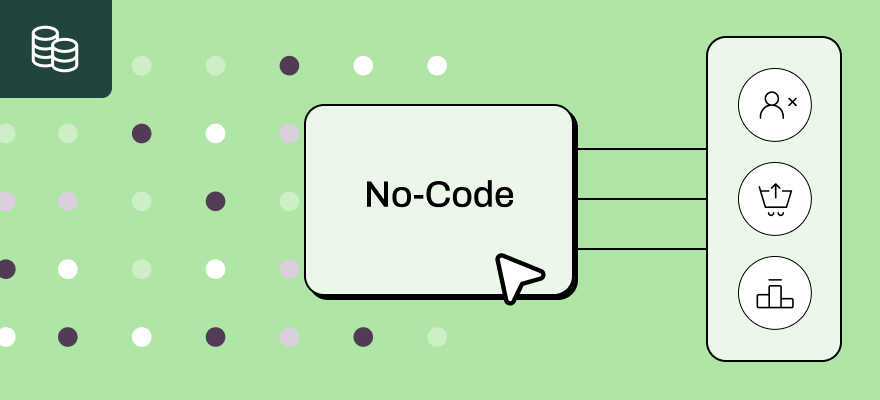
You don’t need to become a data scientist. You don’t need to learn Python. You don’t need to hire consultants or wait months for answers.
Predictive platforms (including Pecan, but also just in general) are built for actual business people to use. You ask a question. The system builds the model. You get predictions you can act on.
That shipping company predicting late packages? They didn’t hire a data science team. They asked a question, plugged in their data, and got predictions back in days. Now they’re proactively managing customer expectations instead of reactively apologizing.
The juvenile justice agency? Same story. They identified a clear outcome they wanted to predict (reoffending), had data about past cases, and now they’re directing resources where they’ll actually reduce recidivism.
Your Turn
Spend 15 minutes this week thinking through those five questions above. Write down 2-3 predictions that would genuinely help you make better decisions.
They don’t all need to be huge. “Which leads should our sales team call first today?” is a perfectly good question. So is “How many customer service agents should we schedule next week?”.
The point isn’t to predict everything. It’s to stop reacting to everything.
Because once you start seeing a few moves ahead, it’s pretty hard to go back to staring at what already happened.
And your competitors? They’re still looking at their dashboards, trying to figure out what went wrong last quarter.
You’ll be busy making next quarter better.
Want to try this out? Pecan’s Predictive AI Agent helps business teams build accurate predictions without needing data science expertise. No coding. No consultants. Just ask your question and get actionable forecasts in the tools you already use.

Team Pecan is what happens when you put a bunch of data geeks in a room and tell them to make machine learning suck less. We’ve built models, broken models, fixed models, and occasionally questioned our life choices at 2am debugging feature pipelines. Now we write about it so you don’t have to learn the hard way. Think of us as your slightly unhinged data science friends who actually want you to succeed.